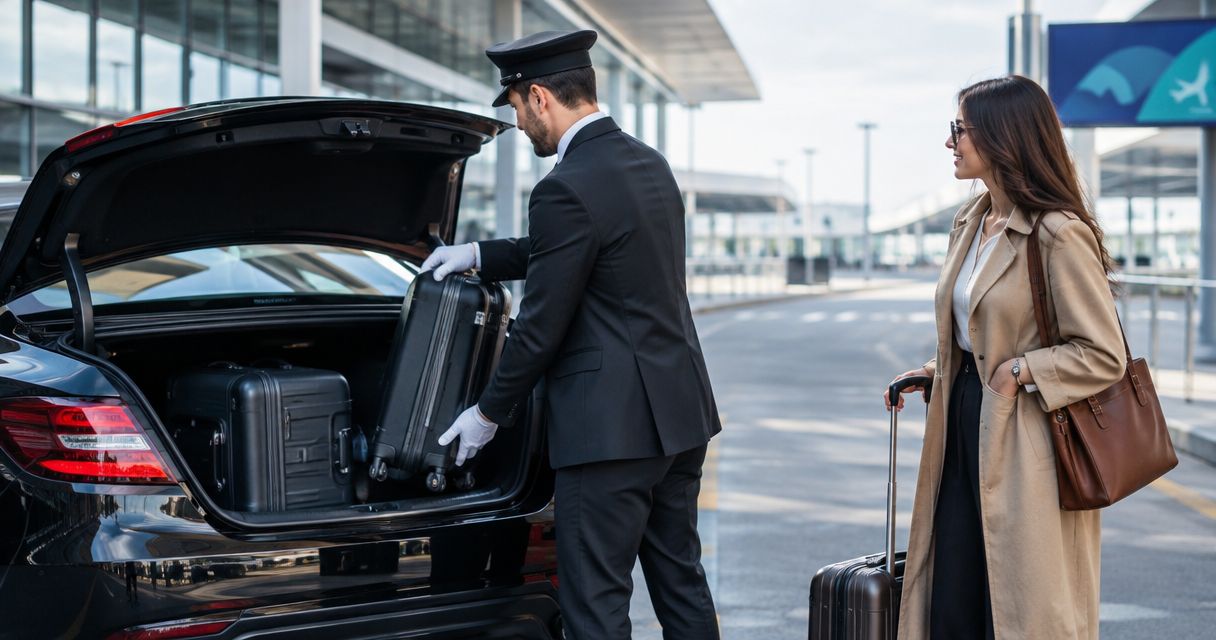
Yes. Government delegations can request coordinated chauffeur transport for a shared itinerary, with vehicle assignments, departure sequencing, and a designated coordination contact agreed before travel. A coordinated vehicle movement is not automatically a police-escorted or protected motorcade; the delegation must confirm escort authority, security responsibilities, and access permissions separately with the relevant authorities.
- A government delegation motorcade chauffeur request should separate transport coordination from official escort and protective security.
- Your protocol office should approve passenger assignments, arrival procedures, and who can authorize itinerary changes.
- Confirm vehicles, airport access, communication arrangements, and contingencies in writing before accepting the movement plan.
- Use a shared itinerary, but restrict passenger details and sensitive instructions to the people who need them.
Can government delegations request a coordinated motorcade?
Yes—request coordinated vehicles, but define exactly what “motorcade” means for your visit. A delegation moving between an airport, hotel, and official appointments needs a different brief from a visit requiring police escort or protective security.
Start with your protocol office’s ground transport workflow. Establish who approves the movement plan before requesting vehicles.
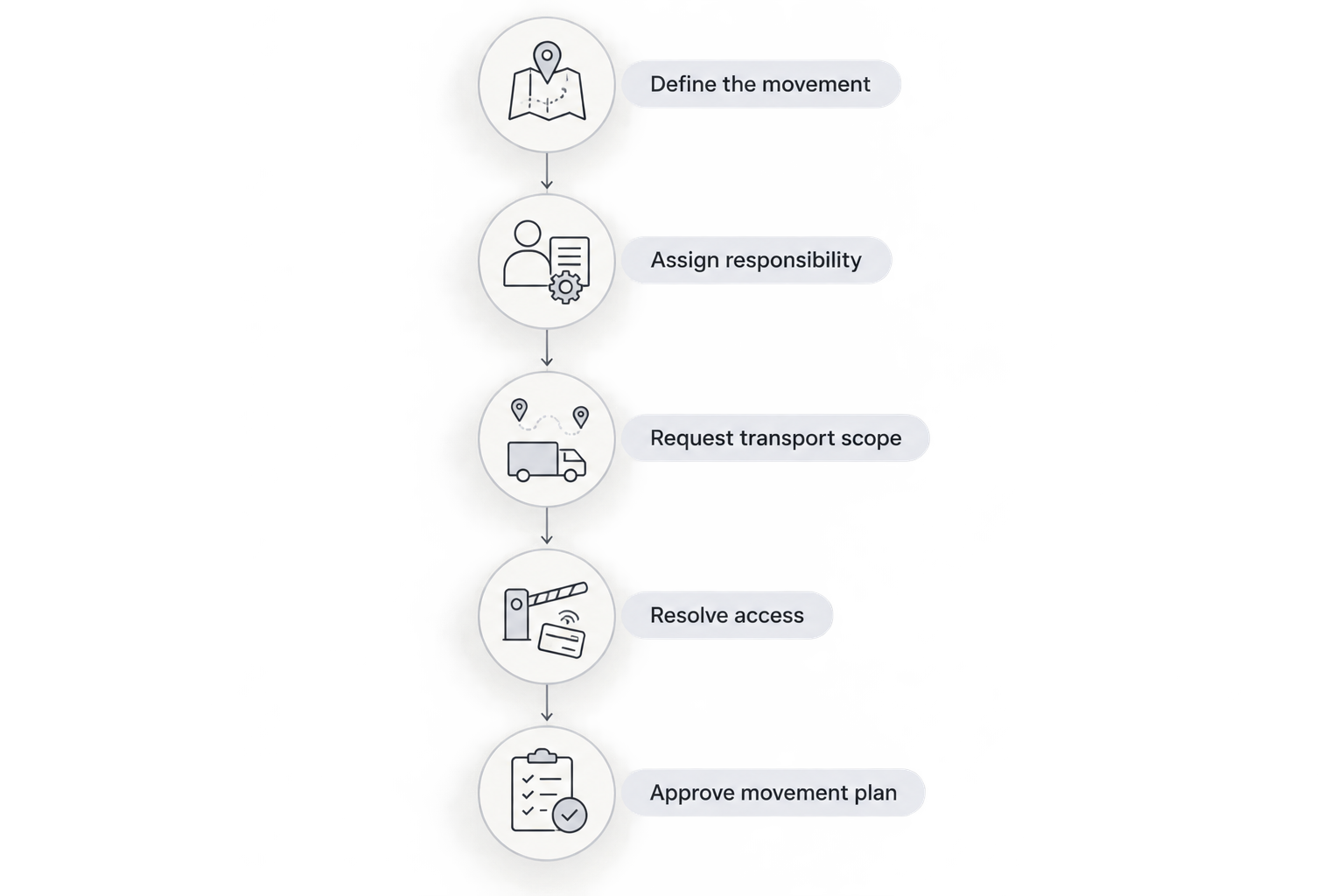
For a 2026 delegation visit, use this sequence:
- Define the movement. List each arrival, departure, venue, and scheduled stop. Distinguish confirmed appointments from provisional movements, and identify which passengers must travel together.
- Assign responsibility. Name the delegation coordinator, transport contact, protocol lead, and any separately appointed protective-security lead. Record who can authorize a departure or approve a change.
- Request the transport scope. Specify passenger and luggage requirements, accessibility needs, vehicle presentation, and whether vehicles must remain with the delegation between appointments.
- Resolve access and permissions. Confirm airport meeting arrangements, venue entry instructions, loading locations, and any official escort requirements with the responsible parties. Do not treat a vehicle booking as access approval.
- Approve the movement plan. Reconcile the itinerary, passenger assignments, contact list, and contingency instructions. Obtain written confirmation of the agreed transport arrangements before circulating the operational version.
The result should be an actionable brief, not simply a list of cars. Each responsible person should know where instructions originate and how changes reach the chauffeurs.
Why this matters
A shared destination does not make separate bookings a coordinated operation. If each passenger sends instructions independently, the transport contact has no agreed basis for resolving conflicting requests.
For government and diplomatic travel, separate three responsibilities: passenger transport, protocol, and protective security. A chauffeur booking should never stand in for confirmation from the authority responsible for escort or security arrangements.
Your 2026 travel brief should make those boundaries explicit. That gives the delegation coordinator a clear approval path when a meeting overruns, a passenger changes vehicles, or a venue changes its arrival instructions.
Which booking structure fits the delegation?
Choose the structure around the itinerary, not the word “motorcade.” Ask the provider to confirm how vehicle coordination works within the requested service.
| Transport structure | Best for | Operational advantage | Limitation to resolve |
|---|---|---|---|
| Coordinated airport transfers | Delegates arriving or departing on defined flights | Connects each passenger group to a specific airport movement | Separate flights require separate arrival instructions and passenger assignments |
| Hourly or as-directed charter | Delegations moving between appointments | Keeps the transport brief centered on an evolving schedule | Confirm the agreed service window and how changes are authorized |
| Point-to-point travel | Confirmed journeys between named locations | Gives each movement a defined origin and destination | Do not assume intermediate stops or continued vehicle attendance are included |
| Multi-city delegation transport | Visits spanning different cities | Allows a shared itinerary and coordination brief | Each city still needs local vehicle, access, and handover confirmation |
These structures can serve different parts of the same visit. An airport arrival does not require the same instructions as a day of official meetings.
Choose hourly transport for itinerary flexibility, not as a substitute for a confirmed scope. Ask how additional stops, changed destinations, and continued attendance will be handled before approving the booking.
Why delegation motorcade arrangements vary
The right arrangement depends on the movement requirements you provide. Include these factors in the request rather than leaving the transport desk to interpret them:
- Passenger assignments. Identify who must travel together and who can travel separately. Keep protocol precedence distinct from personal vehicle preferences.
- Arrival patterns. List flight details and distinguish commercial-terminal arrivals from any separately arranged private-terminal movements. Confirm the meeting procedure for each arrival.
- Luggage and accessibility. State the actual requirements before vehicle selection. Do not infer luggage space or wheelchair access from a vehicle category name.
- Schedule control. Identify fixed appointments, provisional stops, and periods requiring vehicles to remain assigned. Name the person authorized to change them.
- Official requirements. Flag escort requests, restricted access, vehicle presentation, and protocol instructions. Obtain acceptance from the responsible authority or provider for each requirement.
- City handovers. Record local contacts, meeting locations, and the point at which coordination passes to the next team. A common itinerary does not remove local confirmation work.
Ask for unresolved items to be marked explicitly. An unanswered request is not an accepted instruction.
How should airport arrivals be coordinated?
Treat landing, passenger readiness, and vehicle departure as separate events. Flight tracking helps the transport desk follow an aircraft; it does not establish that passengers have cleared arrivals or reached the meeting point.
For each airport movement, record:
- Flight identifier and travel date.
- Passenger group and lead contact.
- Confirmed meeting location and identification method.
- Luggage and accessibility requirements.
- Who reports that passengers are ready.
- Who authorizes departure if another group remains delayed.
For a 2026 arrival plan, write the departure rule in plain language. Specify whether groups should leave independently or wait for the delegation coordinator’s instruction. Do not leave that decision to individual passengers at the curb.
Use the flight itinerary to multi-city chauffeur booking workflow to structure handovers between arrival cities. Confirm each local arrangement rather than copying one airport’s meeting instructions into every movement.
Keep the airport-to-hotel movement separate from later appointments. If an arrival delay affects the next departure, the coordinator needs to approve the revised itinerary and communicate it to everyone responsible.
Who should control changes during the visit?
Designate an authorized movement coordinator and a backup. Ask passengers to route itinerary changes through that contact instead of issuing competing instructions directly to different chauffeurs.
Your change process should answer four questions:
- Who requested the change?
- Who approved it?
- Which passengers, vehicles, and venues are affected?
- Who confirmed receipt of the revised instruction?
Record the revision time and identify the current itinerary. Withdraw superseded versions from active use wherever possible, and tell the transport contact which version governs the next movement.
For the 2026 run sheet, distinguish an update from a departure instruction. A revised meeting address does not, by itself, tell every chauffeur when to move.
If an official escort or protective team is involved, agree on how transport instructions interface with that team’s authority. Do not create parallel departure commands between the delegation office and the transport desk.
What should the briefing say about privacy?
Share the operational information needed to carry out the journey. Ask your organization’s protocol or security lead to determine how sensitive passenger details, accommodation information, and appointment locations should be distributed.
A transport briefing should identify the approved communication channel, authorized recipients, and escalation contact. Confirm how passenger-facing identification will work when public display of a name or organization is inappropriate.
Do not equate a black vehicle, a discreet chauffeur, or a private booking with a verified protective-security arrangement. If the delegation requires specialist protection, secure communications, or specific vehicle protection, put that requirement through the appropriate approval process and obtain explicit confirmation.
The practical test is simple: can each recipient perform the assigned task without receiving unrelated sensitive information? Use that question when preparing chauffeur instructions, passenger messages, and venue arrival notices.
Does a coordinated motorcade include police escort?
No—do not assume police escort is included in coordinated chauffeur transport. Ask the responsible government, host, or police authority to confirm whether an escort is authorized and how it interfaces with the transport provider.
Keep escort confirmation separate from vehicle confirmation. The movement plan should state who owns each responsibility without implying that a commercial booking grants special road privileges.
Can the delegation change stops during the day?
Yes, the delegation can request changes, but the provider must confirm the revised transport scope. Identify the person authorized to approve changes and ask how the request affects later movements.
For changing schedules, request hourly or as-directed transport and confirm the service window. Do not assume a point-to-point booking includes continued attendance or unplanned stops.
Does coordination guarantee that vehicles stay together?
No—do not treat coordinated departure instructions as a guarantee that vehicles remain physically together. Your plan needs a destination and a communication procedure for each vehicle if traffic separates the group.
Where movement continuity is an official requirement, refer it to the responsible authorities and protective team. Chauffeurs should not receive instructions that depend on unconfirmed traffic control or special access.
When Chauffyr fits the transport brief
Chauffyr is best for delegation coordinators who need executive chauffeur transport through one 24/7 desk. The US-based executive chauffeur partner serves 120+ airports across 50+ countries, with worldwide service involving vetted chauffeurs and affiliates rather than an assumed company-owned fleet in every city.
Chauffyr’s delegation transport offering includes airport transfers, hourly charters, point-to-point travel, and coordinated corporate or delegation movements. Flight tracking supports airport coordination, and corporate accounts offer consolidated billing.
The boundary remains important: these service details do not establish police escort, armored vehicles, specialist protection, or permission to enter restricted areas. Submit the itinerary and specific requirements, then obtain confirmation of the proposed arrangement before approving travel.
For a 2026 visit, arrange executive chauffeur transport with the operational brief attached. Ask for a written response to each requirement, including anything that needs separate authorization.
Arrange delegation travel
Submit the itinerary, passenger requirements, and coordination brief for confirmation.
FAQ
Can I request a government delegation motorcade chauffeur for an official visit?
Yes, you can request coordinated chauffeur transport for an official visit. Define the vehicle movements, passenger assignments, coordination contact, and any requirements that need separate authority approval.
Does a chauffeur motorcade include police escort?
No, you should not assume police escort is included in a chauffeur booking. Confirm escort authorization and operating responsibilities separately with the relevant authorities.
Can our delegation book vehicles for several cities?
Yes, multi-city delegation transport is part of Chauffyr’s stated offering. Submit the complete itinerary and obtain confirmation of vehicle arrangements, local contacts, and handovers for each city.
Should we book hourly service or individual transfers?
Request hourly or as-directed service for a changing appointment schedule, and defined transfers for fixed journeys. Confirm the service window, stops, and change process before approving the arrangement.
Can we request armored vehicles for the delegation?
You can state an armored-vehicle requirement, but do not treat it as accepted without explicit confirmation. Refer protection requirements to your security lead and verify the proposed vehicle and operating arrangements separately.
What should I send with a delegation transport request?
Send the itinerary, passenger and luggage requirements, accessibility needs, flight details, authorized contacts, and protocol instructions. Identify provisional items and requirements awaiting official approval.
Will flight tracking tell the chauffeur when our delegation is ready?
Flight tracking follows the flight, not the delegation’s progress through arrivals. Agree on who reports passenger readiness and who authorizes the vehicle departure.
One last thing
Approve a separation plan as carefully as the departure plan. Give each vehicle a confirmed destination, an authorized contact, and instructions for reporting a missed connection with the group.
That is the final check before releasing the run sheet: every vehicle should have enough approved information to complete its assigned movement without relying on visual contact with the car ahead.