
A chauffeur can accommodate the road-transfer portion of a tight connecting-flight layover when the full airport-to-airport schedule leaves enough time for arrival formalities, pickup, traffic, check-in, and security. A chauffeur cannot guarantee the onward flight, bypass airport procedures, or make a connection workable simply because the drive fits between the scheduled flights.
- Chauffeur tight flight connection requests need a full airport timeline, not just a driving estimate.
- For a same-airport connection, check the airport’s official transfer route before arranging a road vehicle.
- Flight tracking supports pickup coordination; it does not remove baggage, immigration, security, or boarding deadlines.
- Keep the airline and ground-transport decisions separate: confirm the flight connection before committing to the transfer.
Why this matters
A layover is not a usable driving window. Your traveler must first reach a permitted pickup point, then arrive at the correct departure terminal early enough to complete the onward airline’s requirements.
For an executive assistant planning a 2026 itinerary, the operational question is not whether a chauffeur can drive between two airports. It is whether the traveler can complete every required stage before the earliest applicable deadline. Use the flight itinerary to multi-city chauffeur booking workflow to organize the flight and ground details together.
Book against the complete connection timeline, not the scheduled landing time alone. A car reservation solves a ground-transport requirement; it does not validate an airline itinerary.
Can a chauffeur accommodate a tight connecting flight layover?
Yes, when the connection requires a landside road transfer and the schedule accommodates every airport and road stage. Establish that sequence before choosing the vehicle or pickup arrangement.
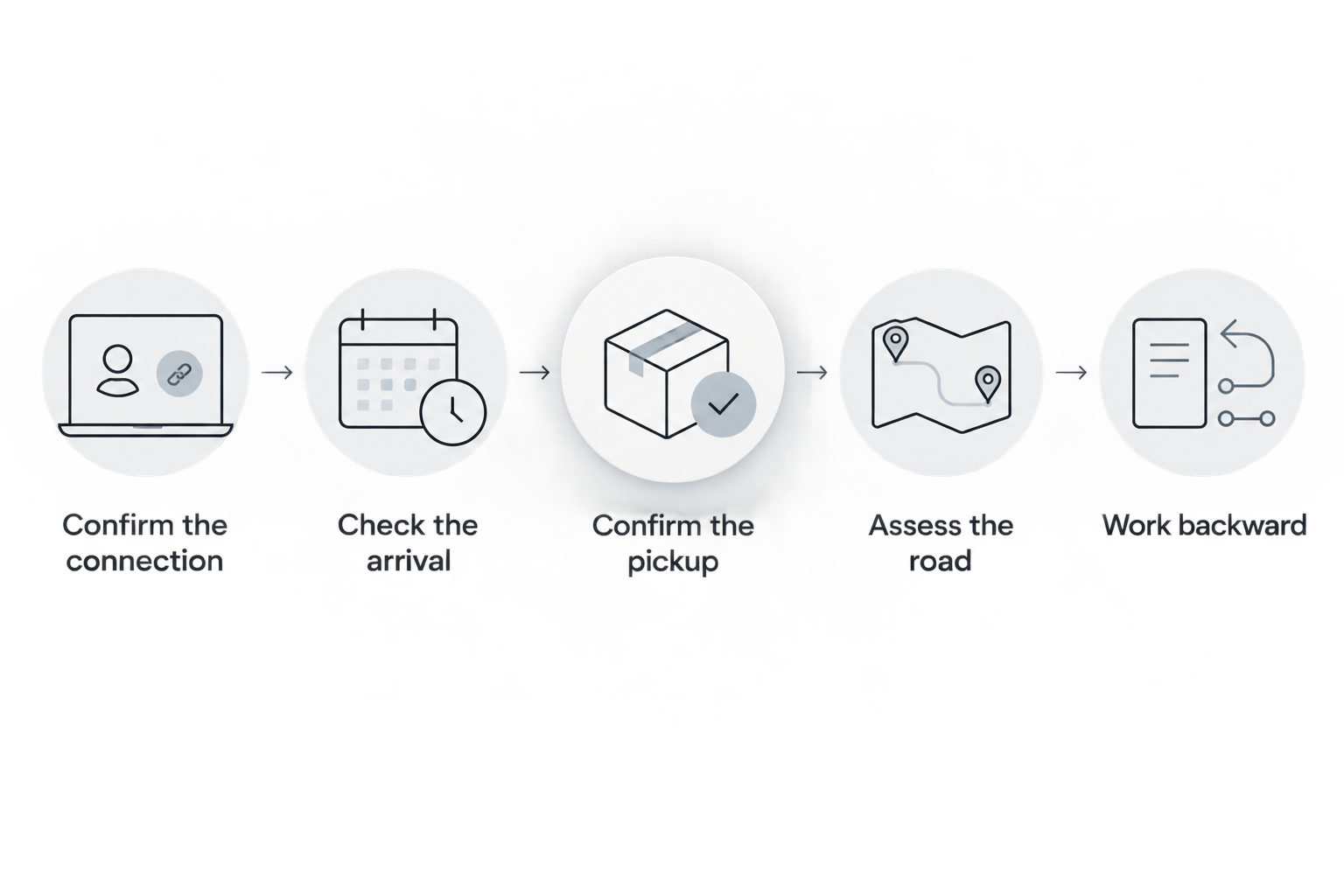
- Confirm the connection. Identify the arrival airport, departure airport, terminals, flight numbers, travel date, and whether the flights share a ticket. Ask the airline what the itinerary requires.
- Check the arrival process. Establish whether the traveler must clear immigration, collect checked baggage, pass customs, or change terminals before meeting the chauffeur.
- Confirm the pickup. Request the permitted meeting location and the route from arrivals to the vehicle. Do not treat touchdown as passenger readiness.
- Assess the road transfer. Ask the transport coordinator to assess the route for the planned day and time, including disruption contingencies.
- Work backward from departure. Use the airline’s applicable check-in, bag-drop, and boarding deadlines, plus the airport’s departure procedures, to establish the required terminal arrival time.
Keep the sequence in one written brief. The executive assistant, traveler, airline contact, and ground coordinator should be working from the same flight details and decision points.
The chauffeur’s confirmed assignment should identify the departure terminal, not just the airport. If the airline changes that terminal, send the update through the agreed contact rather than assuming every participant has received it.
Same-airport connection: check whether a car is needed
Best for: travelers whose onward flight leaves from the same airport. Start with the airport’s official connection instructions and determine whether the transfer stays airside or requires an exit and another departure process.
An airport train, shuttle, walkway, or other designated connection route is a different operation from a chauffeur pickup. Confirm which route applies to the traveler’s terminals and immigration situation. Do not substitute a road transfer without understanding the airport’s instructions.
A chauffeur becomes relevant when the itinerary genuinely requires landside movement. The limitation is the extra coordination involved in reaching a vehicle and returning to a departure terminal; a car is not automatically the shortest path between gates.
For a 2026 booking, verify the current terminal arrangements with the airport and airline. Previous experience with the same airport does not establish the correct process for the new itinerary.
Different-airport connection: assess the full landside transfer
Best for: travelers who must move between separate airports. A prearranged chauffeur gives the road leg a defined pickup plan, destination, and coordination contact. The limitation remains the road journey and the airport processes on either side.
Give the coordinator both flight records. An arrival flight number alone does not explain how quickly the traveler must reach the departure terminal or what happens if the inbound flight changes.
| Connection arrangement | Best for | Operational advantage | Limitation |
|---|---|---|---|
| Official airport connection route | Same-airport transfers where the designated route applies | Follows the airport’s connection process | Depends on terminal access and the traveler’s required formalities |
| Prearranged chauffeur transfer | Required landside travel between airports or terminals | Establishes a pickup plan and road-transfer contact | Cannot control queues, road disruption, or airline deadlines |
| Revised flight itinerary | A connection that does not leave a defensible transfer window | Addresses the flight schedule rather than relying on a faster drive | Requires airline or travel-adviser action and revised ground arrangements |
Do not approve an airport change on drive time alone. Require a plan that accounts for passenger release, pickup access, departure processing, and disruption.
Why connection feasibility varies
The same pair of airports does not produce the same transfer plan for every traveler. These factors determine what you need to confirm:
- Arrival formalities. Immigration, customs, and the traveler’s entry requirements affect when the traveler can reach landside pickup.
- Baggage handling. Confirm whether checked bags transfer onward or must be collected and checked again. Ask the airline rather than assuming.
- Terminal access. The permitted pickup location and onward departure terminal determine the actual walking and vehicle movements.
- Road conditions. Traffic, closures, and incidents affect the road leg. A quoted driving estimate is not a guaranteed arrival time.
- Airline deadlines. Check-in, bag-drop, and boarding requirements are separate from the flight’s scheduled departure time.
- Traveler requirements. Assistance needs, party size, luggage, and required stops belong in the initial brief because they affect the transfer arrangement.
For 2026 travel, confirm these details for the specific flight date. Keep assumptions out of the final instruction: distinguish an airline-confirmed requirement from a planning estimate supplied for the road leg.
What should you send before requesting a transfer?
Send a short operational brief, not a screenshot without context. The coordinator needs to understand both the requested movement and the deadline it serves.
Include:
- Arrival and departure flight numbers, dates, airports, and terminals where confirmed.
- Scheduled arrival and departure times, with the local time zone identified.
- Airline-confirmed check-in, bag-drop, and boarding requirements.
- Whether the traveler must collect baggage or complete entry formalities.
- Passenger count, luggage description, and any assistance requirements.
- Traveler and assistant contact details, plus the person authorized to approve changes.
- The agreed response if the connection becomes unworkable.
Keep sensitive information limited to what the transfer requires. Ask how documents and itinerary updates should be shared rather than circulating unnecessary passport or delegation details across a broad message thread.
For a government or diplomatic movement, identify the protocol coordinator. Do not assume that status changes airport access, immigration processing, or pickup permissions.
Can flight tracking save a tight connection?
Flight tracking supports pickup coordination, but it cannot guarantee a tight connection. A revised arrival estimate does not establish when the passenger will finish immigration, receive baggage, or reach the meeting point.
Use tracking alongside a passenger-readiness update. Agree whether the traveler or assistant will report that bags are collected and the traveler is approaching pickup.
If the inbound flight is delayed, reassess the whole transfer. Moving the chauffeur’s pickup time does not move the onward airline’s deadlines. Ask the airline or travel adviser to address the flight itinerary while the ground coordinator reviews the road assignment.
What happens if the inbound flight arrives late?
A late inbound flight requires a fresh feasibility decision, not an instruction to drive faster. Compare the revised passenger-ready estimate with the onward flight’s applicable deadlines and the updated road assessment.
Name the decision-maker before departure. The traveler should not have to settle conflicting instructions from an assistant, airline, and chauffeur while moving through arrivals.
Your 2026 contingency brief should specify who contacts the airline, who updates the ground coordinator, and who approves a changed destination. Confirm the booking’s amendment, waiting, and cancellation terms separately; do not assume that flight tracking determines those terms.
Should you leave the airport during a short layover?
Do not leave solely because the gap between flights appears long enough for a drive. First confirm entry permission, departure requirements, the return journey, and whether the outing leaves a workable airport-return plan.
For an optional meeting or meal, set the latest return-to-airport decision before leaving. Remove the stop if the arrival process consumes the available window. A business commitment does not change boarding requirements.
Keep optional stops out of an already tight airport transfer. If the meeting matters more than the current flight, ask the travel adviser to review the itinerary rather than compressing both commitments into an unsupported schedule.
How should an executive assistant manage the handoff?
Give each participant a defined responsibility. The assistant maintains the approved itinerary; the airline or travel adviser addresses flight changes; the ground coordinator confirms the vehicle assignment and pickup instructions.
The traveler needs a concise arrival message containing the meeting point, contact method, destination terminal, and escalation contact. Keep detailed contingency discussion with the coordinating team so the traveler receives clear instructions rather than competing options.
Record changes in the shared brief. A verbal terminal change or revised destination is not complete until the ground coordinator acknowledges it. For finance and legal teams, retain the approved trip reference for later billing reconciliation without placing confidential meeting content in the chauffeur instructions.
When Chauffyr fits the transfer plan
Chauffyr suits executive assistants who need airport-transfer coordination through one 24/7 desk. The US-based service coordinates worldwide travel through vetted chauffeurs and affiliates; that does not mean it owns a fleet or employs every chauffeur in each destination.
Chauffyr serves 120+ airports across 50+ countries and provides flight tracking. Those features support a coordinated road assignment, not a guaranteed flight connection. Confirm the exact airports, pickup arrangements, and requested itinerary before proceeding.
For a 2026 transfer request, send both flight records and ask for a feasibility review of the ground leg. Use the contact page to arrange travel once the airline requirements and contingency decision are clear.
FAQ
Can a chauffeur guarantee I will make my connecting flight?
No. A chauffeur can coordinate the road transfer but cannot guarantee immigration processing, baggage delivery, road conditions, security screening, or boarding acceptance.
Is a chauffeur useful for a connection within the same airport?
A chauffeur is useful only if the connection requires an appropriate landside road movement. Check the airport’s official terminal-transfer instructions before arranging a vehicle.
Does flight tracking tell the chauffeur when I am ready for pickup?
No. Flight tracking reports flight status, not completion of baggage collection or arrival formalities. Agree on a passenger-readiness update and a permitted meeting point.
What should I do if my arriving flight is delayed?
Ask the airline or travel adviser to reassess the connection and notify the ground coordinator. A later pickup does not change the onward flight’s check-in or boarding deadlines.
Can a chauffeur take me through airport security faster?
A road-transfer booking does not provide expedited airport security. Follow the airport’s procedures and confirm any separate assistance arrangements with the appropriate provider.
Should I collect my bags before meeting the chauffeur?
Confirm baggage handling with the airline before the trip. If you must collect and recheck bags, include both processes in the connection timeline and tell the ground coordinator.
What details does a chauffeur service need for an airport change?
Provide both flight records, the required departure-terminal arrival time, passenger and baggage details, and a change-approval contact. Ask for pickup instructions and a ground-transfer contingency plan.
One last thing
The deadline that matters is not necessarily the departure time printed on the itinerary. Check-in, bag-drop, and boarding requirements can close earlier, so establish the applicable deadlines before assessing the drive.
Write the required departure-terminal arrival time beside the onward flight in your brief. That gives the assistant and ground coordinator a shared planning target without turning a road estimate into a promise.


