
Chauffeur service for executive recruiters is prearranged ground transportation that connects candidate arrivals, interviews, and departures with the aim of keeping hiring visits on schedule. Unlike a routine business transfer, a recruiting itinerary needs controlled information sharing, clear responsibility for changes, and pickup instructions that do not expose a confidential search.
- Choose chauffeur service for executive recruiters when candidate travel requires coordinated airport transfers, interview stops, and controlled itinerary changes.
- Use point-to-point travel for fixed interview schedules and hourly charters when meeting end times remain uncertain.
- Chauffyr fits recruiters needing US-based coordination, worldwide affiliates, flight tracking, and one 24/7 desk.
- Keep candidate transport instructions separate from interview assessments, compensation discussions, and confidential search documents.
Why chauffeur service matters for executive recruiters
A candidate visit connects several people who do not need the same information: the recruiter, candidate, executive assistant, interview panel, and transport coordinator. Your ground travel plan should connect their actions without circulating the entire search file.
For your 2026 recruiting travel plan, define the handoffs before choosing the vehicle. Who confirms that the candidate has reached the pickup point? Who authorizes an additional stop? Who changes the return transfer when the interview runs late?
The booking is not complete until someone owns each change. Use the calendar-to-chauffeur booking workflow to connect appointment details with transport instructions, then apply the recruiting-specific controls below.
Build a candidate transport plan
Define the candidate journey before requesting transport
Start with a shared itinerary document or spreadsheet. List each movement separately, including the airport arrival, hotel transfer, interview venue, meal location if relevant, and departure. Record the actual entrance rather than relying on a building name.
Distinguish appointment times from pickup times. An interview beginning at a stated time does not mean the candidate should reach the curb at that time. Work backward using the route, building access instructions, and the candidate's preparation needs; do not apply a universal airport or city buffer.
Ask the candidate directly about luggage, access requirements, and preferred travel contact. Keep those operational details separate from interview feedback.
- Record the flight number and local arrival date.
- Specify each destination's full address and entrance.
- Separate appointment times from vehicle pickup times.
- Confirm passenger and luggage requirements.
- Identify the person receiving the candidate at each venue.
Assign authority for itinerary changes
Create a contact sheet before sending the booking request. A spreadsheet is sufficient: name the booking owner, the person handling travel-day questions, and the backup who can approve changes when the recruiter is interviewing.
The candidate should know whom to contact without becoming the intermediary between the chauffeur and the hiring team. Equally, the transport provider needs a clear answer when the candidate requests a different destination or the host adds an unscheduled dinner.
Write an approval rule that distinguishes routine updates from scope changes. A revised entrance is not the same decision as adding another city. Confirm how the provider records both before travel begins.
- Name the primary transport coordinator.
- Assign a backup with access to the current itinerary.
- State who can approve additional stops.
- Define who communicates changes to the candidate.
- Record where the latest confirmed itinerary lives.
Match the booking format to the interview schedule
Mark each movement as fixed or dependent on the previous meeting. This simple exercise helps you choose between an airport transfer, separate point-to-point trips, and an hourly charter without assuming every candidate needs the same arrangement.
Use point-to-point travel for defined movements; consider an hourly charter for an evolving interview day. An hourly booking still needs an agreed scope. Confirm the operating area, how extensions are handled, and what happens when the candidate finishes earlier than planned.
For multi-city visits, request confirmation for each location rather than treating a single accepted journey as confirmation of the whole program. Keep the booking references together so a substitute coordinator can follow the itinerary.
- Label fixed transfers separately from flexible movements.
- Identify meetings with uncertain finish times.
- Request written confirmation of the selected format.
- Confirm extension and change procedures.
- Check each city and travel date individually.
Limit what you share about the search
Prepare a transport-only brief instead of forwarding the recruiting calendar with all its attachments. The chauffeur needs actionable pickup instructions, not candidate assessments, compensation expectations, or discussion notes from the hiring committee.
Ask the candidate which name and contact method should appear in pickup communications. For a confidential search, agree on identification instructions before arrival; do not improvise a public sign containing the candidate's name and prospective employer.
Do not equate a black vehicle or professional presentation with a confidentiality agreement or protective service. If your organization requires specific contractual terms, approved communications, or security arrangements, have the responsible team review those requirements separately.
- Share only information needed to perform the journey.
- Agree on the name used for pickup identification.
- Remove interview notes from transport attachments.
- Confirm who receives travel-status updates.
- Route contractual requirements through the authorized reviewer.
Confirm the airport handoff and delay procedure
Build an airport arrival checklist that distinguishes landing from being ready for pickup. Baggage collection, border formalities, terminal movement, and the candidate's own needs sit between those events. Confirm the meeting method for the specific airport rather than copying instructions from another trip.
Request flight tracking, then ask what action follows a flight change. Tracking a delayed arrival does not by itself explain how a missed connection, diversion, or different arrival airport will be handled.
Your 2026 arrival brief should also explain what happens when the candidate cannot find the chauffeur. Give the candidate an escalation contact and ensure the coordinator has the same instructions.
- Confirm the arriving flight and operating date.
- Request the exact meeting location and identification method.
- Confirm how the chauffeur and candidate make contact.
- Ask how flight changes affect the booking.
- Agree on escalation for a failed meeting.
Control interview-day changes through one record
Keep a master movement sheet and update it whenever the hiring team changes the schedule. Email and a shared document can handle this manually, provided the booking owner records the revision and obtains acknowledgment from the transport provider.
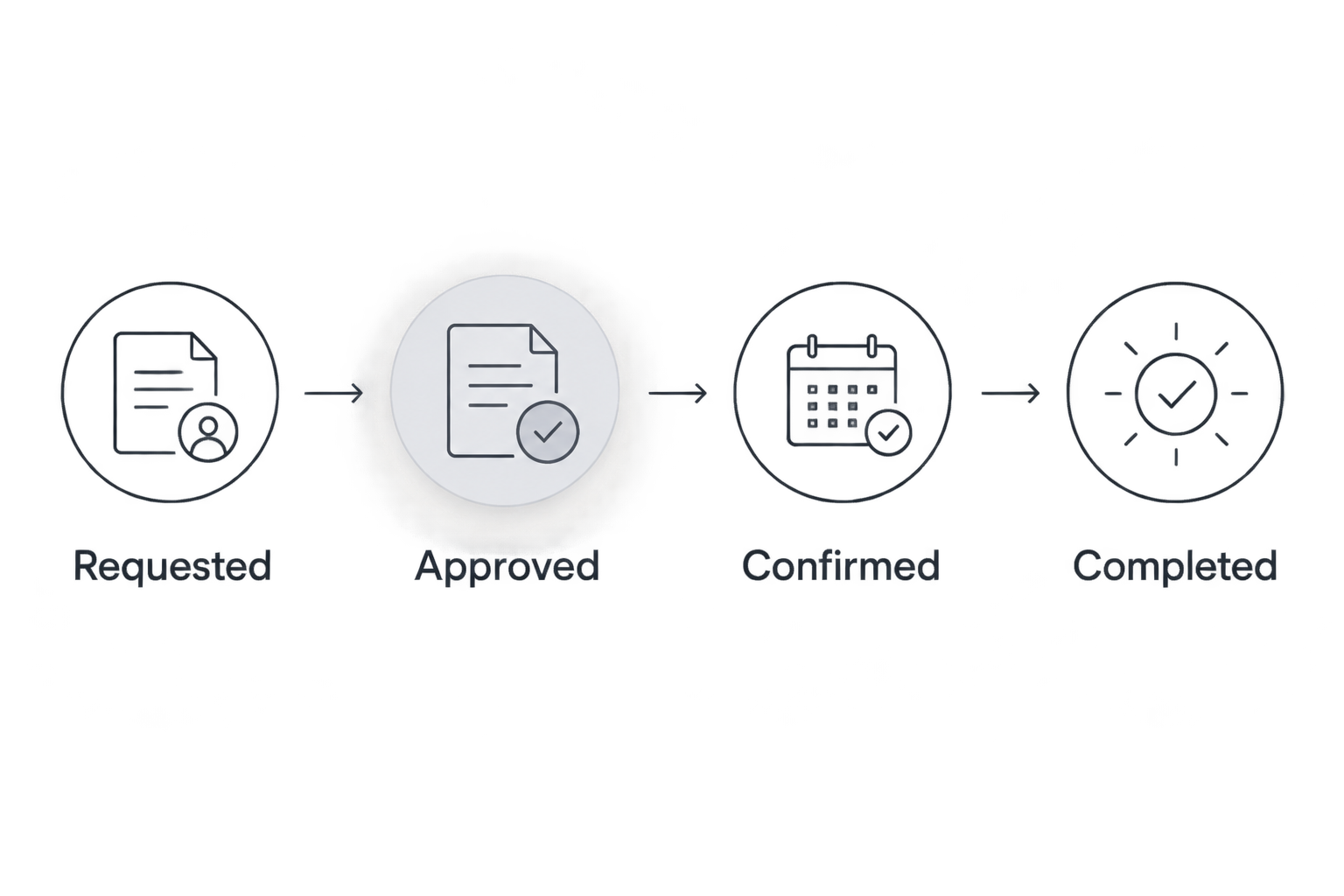
Use explicit status labels so an internal discussion does not become an assumed instruction. A proposed venue change remains proposed until the coordinator approves it and the provider confirms it. Tell the candidate only what has actually been agreed.
For your 2026 interview program, make this distinction visible in the document itself. Preserve the earlier instruction where needed for reference, but clearly identify which version governs the next pickup.
- Mark each change as Requested, Approved, Confirmed, or Completed.
- Record the revised address and local pickup time.
- Identify the person authorizing the change.
- Obtain provider acknowledgment before treating it as confirmed.
- Send the candidate the final practical instruction.
Reconcile the trip without exposing recruiting details
Create an internal trip reference before booking and use it consistently through approval and reconciliation. The reference should let finance allocate the journey without needing access to candidate evaluations or confidential hiring discussions.
Ask what documentation the provider can supply and which billing fields it can include. Do not assume that a personal receipt, corporate invoice, and consolidated account statement contain the same information. Agree on the required format before the first journey.
Close the transport record after the visit. Separate operational feedback, such as unclear pickup instructions, from the hiring decision. This gives the next coordinator a useful process correction without widening access to the search record.
- Assign a trip reference and internal cost center.
- Confirm the booking approver and billing recipient.
- Keep approvals with the relevant journey record.
- Reconcile completed travel against confirmed instructions.
- Document transport issues outside candidate evaluation notes.
Compare transport options for candidate visits
Choose the format around the interview schedule, not the perceived importance of the candidate. A simple airport-to-hotel movement and a changing sequence of executive meetings create different coordination needs.
| Option | Best for | Practical advantage | Key limitation |
|---|---|---|---|
| Prearranged airport transfer | Candidates arriving for a defined visit | Lets you agree on the arrival handoff before travel | Does not define transport for the rest of the interview day |
| Point-to-point chauffeur booking | Interviews with fixed locations and finish times | Gives each movement a clear origin and destination | Schedule changes require coordination across affected bookings |
| Hourly chauffeur charter | Interview days with uncertain finish times | Supports an agreed period of as-directed travel | Requires a defined scope and extension procedure |
| Separate bookings in each city | Search teams managing local arrangements directly | Lets each local team handle its own travel brief | The recruiter must reconcile contacts, changes, and records |
| Coordinated multi-city transport | Candidate visits spanning several locations | Gives the recruiter a central coordination route | Each local movement still needs specific confirmation |
An hourly charter does not replace itinerary planning. Even a flexible day needs confirmed addresses, passenger requirements, contact ownership, and a departure plan. Conversely, do not request an open-ended charter when the requirement is simply a confirmed transfer between known locations.
Common mistakes executive recruiters make
Forwarding the full interview calendar
A calendar invitation can contain interviewer names, meeting subjects, attachments, and internal notes. Prepare a transport-only version instead. Share the pickup, destination, timing, and authorized contacts without making the transport brief a copy of the search file.
Treating flight arrival as candidate readiness
A landing update does not confirm that the candidate is at the pickup point. Agree on the airport meeting process and the next contact if the handoff fails. Avoid sending a precise onward arrival promise to the interview panel before the candidate is ready to leave.
Letting every interviewer direct the chauffeur
An interviewer can suggest extending a discussion without understanding the candidate's return journey. Route changes through the designated coordinator. That person should check the remaining schedule and obtain transport confirmation before giving the candidate revised instructions.
Assuming discretion means security coverage
Confidential travel instructions and protective transport are different requirements. Do not infer secure communications, protective personnel, or specialist vehicle capabilities from the term executive chauffeur. Escalate those needs to the appropriate internal team and request explicit confirmation of scope.
Leaving reconciliation until the search closes
Candidate travel and the hiring decision do not need the same administrative timeline. Review completed journeys while the instructions and approvals are still accessible. Resolve transport questions without reopening interview feedback or circulating the candidate's broader file.
Where Chauffyr fits a recruiting travel program
Chauffyr is best for recruiters who need one coordination desk for multi-city candidate travel. Chauffyr's chauffeur service includes airport transfers, hourly charters, and point-to-point travel, with US-based coordination and worldwide service through vetted chauffeurs and affiliates.
Chauffyr serves 120+ airports across 50+ countries, with flight tracking and one 24/7 desk. That service structure fits a recruiter coordinating movements across locations; it does not remove the need to confirm the actual airport, route, date, vehicle requirements, and pickup arrangements for each candidate.
For a 2026 recruiting program, use Chauffyr as a coordination option, not as a substitute for internal approval rules. Corporate accounts offer consolidated billing. Confirm the required references, recipients, and documentation before adding candidate visits to an account.
The limitation to plan around is local execution: worldwide coordination does not mean a single owned fleet or the same chauffeur in every city. Ask for the details relevant to each movement, including airport access, meeting instructions, and any special requirements.
Arrange candidate travel
Share the flight details, interview stops, passenger requirements, and booking contact.
FAQ
What's the best chauffeur booking format for an executive candidate interview?
Point-to-point travel fits fixed interview movements; an hourly charter fits a schedule with uncertain finish times. Confirm the scope and change procedure before choosing either format.
Can a recruiter book a chauffeur on a candidate's behalf?
A recruiter can coordinate the booking, but should confirm the provider's third-party booking requirements. Identify the passenger, authorized coordinator, travel contact, and billing recipient separately.
How do I keep a confidential executive search out of pickup instructions?
Use a transport-only brief containing only the information needed for the journey. Agree on pickup identification with the candidate and exclude assessments, compensation details, and internal search notes.
Does flight tracking handle every airport delay?
Flight tracking does not replace an agreed delay procedure. Confirm how the provider handles changed flights, missed connections, diversions, and a candidate who is not yet ready for pickup.
Should the same chauffeur stay with the candidate all day?
Request an hourly charter when you need transport across an evolving interview day, and confirm continuity explicitly. Do not assume that separate transfers include the same chauffeur or vehicle.
Can Chauffyr coordinate candidate travel in different countries?
Chauffyr provides US-based coordination and worldwide service through vetted chauffeurs and affiliates across 50+ countries. Confirm each requested city, route, date, and local handoff before issuing the final candidate itinerary.
What should finance receive after a candidate trip?
Finance should receive the agreed journey documentation, internal trip reference, allocation details, and relevant approvals. Keep interview evaluations and other unnecessary recruiting information outside the billing record.
One last thing
Before releasing your next 2026 candidate itinerary, ask a colleague who has not worked on the search to read only the transport brief. Can that person identify the next pickup, contact the right coordinator, and handle a changed interview finish without opening the recruiting file?
If not, fix the handoff rather than adding more background. A useful candidate travel brief explains the next action without explaining the confidential search.


