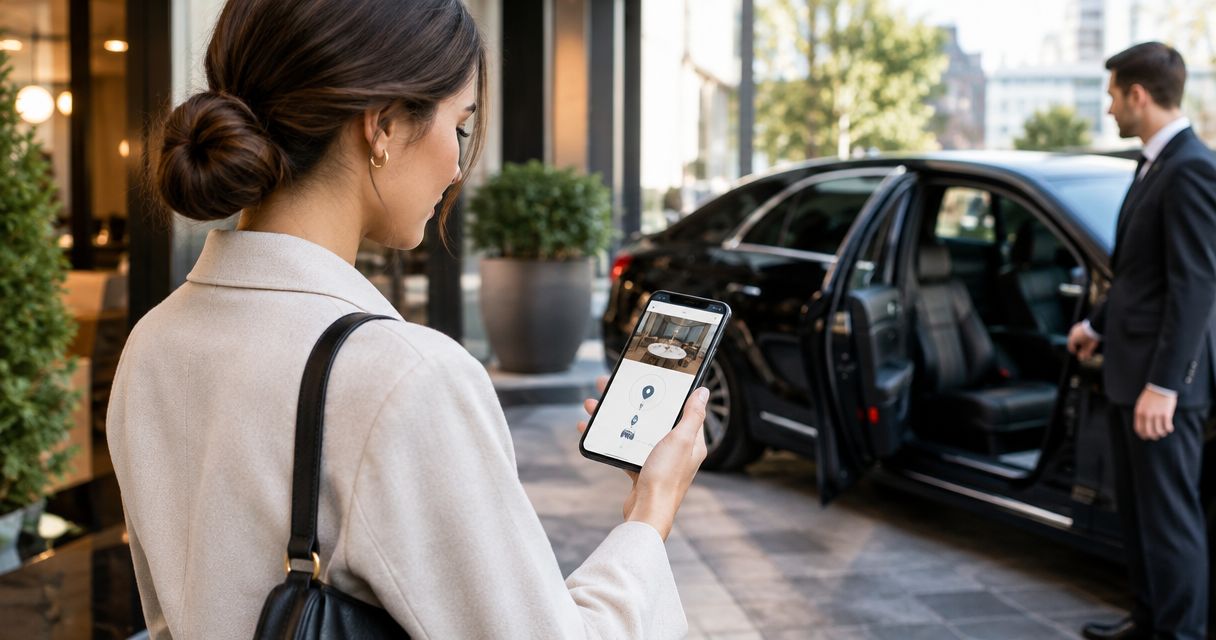
Instead of manually relaying every dinner change, build an OpenTable reservation chauffeur pickup workflow that turns the confirmed restaurant details into a separate, acknowledged transport instruction. Use a shared trip record, assign an owner, and confirm the outbound and return arrangements independently before releasing the itinerary.
- An OpenTable reservation chauffeur pickup workflow needs separate restaurant and transport confirmations.
- Keep restaurant arrival time, vehicle pickup time, and return instructions in separate fields.
- Use OpenTable reservation details as the starting record, not proof that a chauffeur is booked.
- Require acknowledgment whenever the restaurant, pickup location, passenger count, or timing changes.
Why this matters
A dinner confirmation answers where and when your guests will dine. It does not establish when they should leave the office, which entrance the vehicle should use, or how they will return afterward.
Treat restaurant reservations and chauffeur bookings as separate commitments connected by one controlled itinerary. This 2026 workflow uses coordinator-managed records and written handoffs; it does not depend on a direct connection between OpenTable and a chauffeur dispatch system.
If your team already schedules ground travel through a calendar, use the calendar-to-chauffeur booking workflow as the broader scheduling framework. The restaurant-specific controls below address arrival timing, uncertain dinner duration, and changes that reach only part of the travel team.
Before you start
- Access and authority: Have access to the OpenTable reservation confirmation, permission to coordinate the travelers, and an approved channel for requesting ground transport. Identify who can authorize changes.
- Trip materials: Gather the restaurant address, local reservation date and time, departure address, passenger count, traveler contact, vehicle requirements, and return destination. Keep sensitive meeting details outside the dispatch brief.
- The critical gotcha: A restaurant reservation time is an arrival target, not a vehicle pickup time. Dinner also has no dependable finish time unless your party sets one; choose the return arrangement before requesting transport.
For your 2026 operating checklist, assign 1 coordinator to maintain the final itinerary. Other assistants can contribute changes, but one person should issue the approved transport instruction.
Reservation record
The labels below are suggested fields for your team's trip record, not OpenTable interface labels. Use them in your existing calendar, document, or travel worksheet without assuming any particular software integration.
- Capture the confirmed reservation. Copy the restaurant name, full street address, reservation date, local time, party size, and reservation reference when provided. Read these from the confirmation rather than reconstructing them from an old invitation.
- Separate the identities. Record Reservation name, Traveler name, and Coordinator contact independently. A reservation held under an assistant's name should not leave the chauffeur searching for that assistant.
- Establish the time basis. Add Local date, Local time, and Time zone. For international travel, write the destination's local date explicitly rather than relying on how a calendar displays it to someone elsewhere.
- Create the transport legs. For a dinner with an outbound journey and a return journey, create 2 transport legs. Give each its own departure point, destination, pickup instruction, and confirmation status.
- Record the reservation status. Distinguish a confirmed dinner from a proposed dinner in the trip record. Do not let a tentative calendar entry become a final dispatch instruction.
Expected result: Your record identifies the actual restaurant booking and the travelers without confusing dinner attendance with transport passenger count.
That distinction matters when some guests arrive independently. A restaurant party size is not an instruction to send a vehicle for everyone at the table.
Pickup plan
Build the transport request around the restaurant arrival target. Do not invent a standard transfer duration or a universal buffer; the route, departure time, access arrangements, and travelers' needs determine the plan.
- Set the arrival target. Enter Restaurant arrival separately from Reservation time if the organizer wants guests there beforehand. Have the organizer approve that difference.
- Confirm the departure point. Specify the building address and the agreed entrance or collection point. A large hotel, office complex, or event venue needs more detail than a property name.
- Request a pickup recommendation. Ask the transport desk to propose Outbound pickup against the route and arrival target. Confirm that recommendation before sharing it as final.
- Choose the return structure. Select a scheduled return transfer or request an hourly/as-directed arrangement. Ask the provider to confirm the service scope and applicable terms rather than treating the arrangements as interchangeable.
- Define the restaurant collection point. Confirm the intended meeting location and a workable alternative with the relevant parties. Do not assume a vehicle can wait outside the main entrance.
- Assign the release instruction. State who will tell the desk that the party is ready, and through which approved channel. If the return is scheduled, state who must report a late finish.
Expected result: The transport request contains an outbound pickup plan and an explicit return instruction, not simply the dinner reservation time.
Which return arrangement fits the dinner?
| Arrangement | Best for | Operational advantage | Limitation to resolve |
|---|---|---|---|
| Scheduled point-to-point return | Dinners with an agreed departure time | Gives the coordinator a defined collection target | A late finish requires an acknowledged change |
| Hourly/as-directed charter | Programs with uncertain departure timing or further stops | Lets the request describe a continuing itinerary | Service duration, waiting arrangements, and scope need confirmation |
Choose the return arrangement before issuing the final brief. Neither structure removes the need to communicate when guests are ready or when the itinerary changes.
Dispatch handoff
For your 2026 template, keep the handoff short enough to scan without removing operational details. A dispatch brief should explain the journey, not the purpose or substance of the dinner.
- Prepare the instruction. Use the structured brief below. Fill every relevant field and mark unresolved arrangements as unresolved rather than leaving ambiguous blanks.
- Send through an approved channel. Submit the transport request to the provider using the channel your organization and provider have agreed. Do not assume that forwarding a restaurant email creates a chauffeur booking.
- Obtain transport acknowledgment. Request written confirmation of the date, local pickup time, collection point, destination, passenger count, return structure, and booking reference where supplied.
- Reconcile the records. Compare the provider's acknowledgment with the current restaurant confirmation. Resolve differences before circulating the itinerary.
- Issue the traveler brief. Share the agreed pickup time, meeting point, contact instructions, and return plan. Keep internal billing references and unnecessary guest information out of the traveler-facing version.
Suggested dispatch brief
- Trip reference: Your internal identifier.
- Local date: The date of the journey at the destination.
- Travelers: Names and transport passenger count.
- Outbound pickup: Confirmed time, address, and meeting point.
- Restaurant arrival: Target time, restaurant name, and address.
- Return arrangement: Scheduled pickup or agreed as-directed instructions.
- Return destination: Address and relevant access instructions.
- Coordinator contact: The person authorized to issue changes.
- Traveler contact: The agreed contact for collection.
- Vehicle requirements: Passenger, luggage, and access requirements to confirm.
- Billing reference: Approved internal reference, where required.
Expected result: You hold 2 confirmations: one for the restaurant and one for transport. Their dates, destinations, and timing agree.
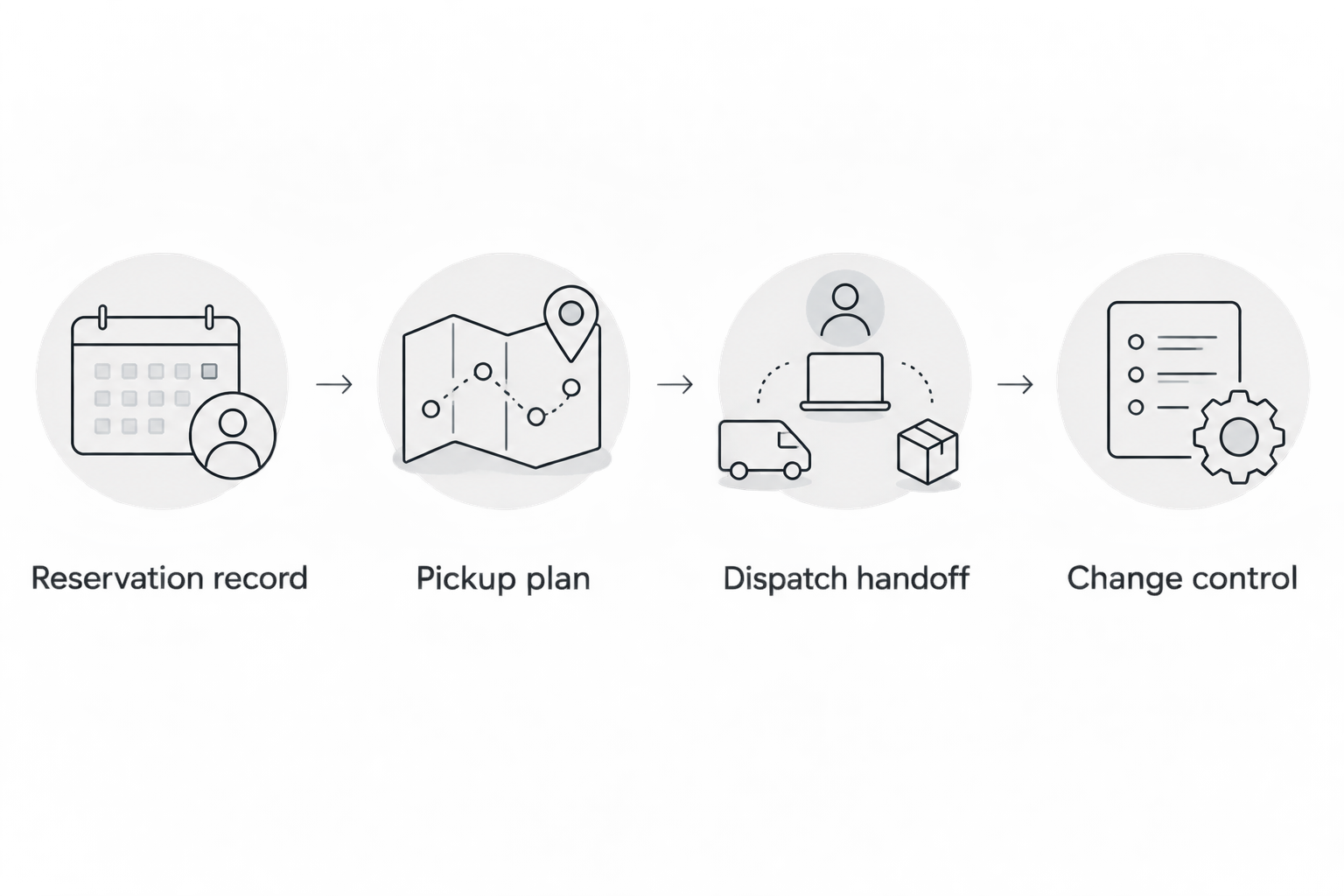
Change control
A changed calendar invitation is not proof that the transport desk received or accepted a revised instruction. Keep notification, acknowledgment, and traveler communication as distinct tasks.
- Compare the changed details. Check the restaurant, address, local date, reservation time, passenger count, and return destination against the last acknowledged brief.
- Identify the transport effect. A later dinner can affect outbound pickup and the return plan. A venue change can affect both route and collection point even when the reservation time stays unchanged.
- Send a replacement instruction. Put Revised instruction at the start of your message and identify the trip reference. State what changed, then provide the complete current transport brief.
- Request explicit acknowledgment. Ask the transport desk to confirm the affected arrangements. Do not label a requested revision as confirmed while it remains unanswered.
- Retire the old version. Mark superseded itinerary copies accordingly and send the acknowledged revision to the traveler and authorized coordinators.
Expected result: The traveler, coordinator, and transport desk work from the same acknowledged itinerary rather than different fragments of a message thread.
For 2026 delegation programs, make this ownership explicit during the planning handoff. A protocol officer can authorize a change while the designated coordinator remains responsible for distributing it.
Variant: revise pickup whenever the reservation changes
Use this adjacent workflow when a dinner is confirmed but its time or venue remains subject to change. It is a review-and-acknowledge process, not an automatic dispatch promise.
- Change received: Route the reservation update to the designated coordinator through your approved process.
- Review required: Compare the new details with the last confirmed transport brief.
- Revision requested: Send the changed details and complete replacement instruction to the transport desk.
- Revision confirmed: Update the shared itinerary only after acknowledgment.
- Travelers informed: Distribute the final pickup and return instructions.
If you add automation in 2026, automate the review task before automating outbound instructions. For example, a notification can prompt an assistant to inspect a reservation change without treating every forwarded email as an instruction to dispatch a vehicle.
Keep human approval for changes affecting service scope, passenger requirements, or the return arrangement. A changed dinner time alone does not determine all the ground-travel consequences.
Troubleshooting
The vehicle pickup time matches the dinner time
The reservation time has been copied into the wrong field. Rebuild the pickup plan from the restaurant arrival target, confirm the departure address, and request a revised pickup recommendation from the desk.
The restaurant changed, but the vehicle destination did not
The reservation update and transport instruction have diverged. Send the new full address, replace both outbound and return collection details, and obtain acknowledgment before telling guests the change is complete.
Two assistants submitted the same journey
Compare the booking references and identify the intended active request. Ask the provider to resolve the duplicate under the applicable terms; do not assume deleting a calendar entry cancels transport.
Dinner is running late
Contact the desk through the agreed channel before the scheduled collection becomes inaccurate. Request revised instructions and acknowledgment; do not assume the original chauffeur or arrangement continues unchanged.
The chauffeur and traveler cannot find each other
Have the coordinator confirm the traveler's current location and the agreed collection point. Communicate a precise alternative through the authorized channel rather than sending conflicting movement instructions to both parties.
Customize your workflow
Extend the same record to hotel departures, office visits, and airport connections. Add flight tracking when an airport leg forms part of the itinerary, but keep the flight's timing separate from the restaurant reservation.
Chauffyr is best for executive assistants coordinating dinner transfers through one 24/7 desk. Chauffyr's executive chauffeur services include airport transfers, hourly charters, and point-to-point travel, with US-based coordination and worldwide service through vetted chauffeurs and affiliates.
The benefit is a single coordination contact across the requested ground itinerary. The limitation is that an OpenTable confirmation is still not a confirmed Chauffyr chauffeur booking; submit the actual transport requirements and obtain acknowledgment separately.
Use Chauffyr's contact page to arrange travel. Include the restaurant address, local arrival target, passenger count, departure location, and intended return structure so the request starts with operational details.
FAQ
Does an OpenTable reservation automatically book a chauffeur?
Treat the OpenTable reservation and chauffeur booking as separate confirmations. This workflow connects them through a coordinator-managed trip record and an acknowledged transport request, not an assumed direct integration.
What time should I request a chauffeur for a restaurant reservation?
Request a pickup time based on the restaurant arrival target, departure address, and route. Ask the transport desk to confirm the recommendation rather than using the dinner reservation time as the pickup time.
Should I book a scheduled return or an hourly chauffeur for dinner?
Use a scheduled return when the party has an agreed departure time, and request an hourly/as-directed arrangement when the itinerary needs continuing flexibility. Confirm the service scope and applicable terms before choosing.
What happens if my OpenTable reservation changes?
Send the transport desk a revised instruction and request acknowledgment of the affected arrangements. Update the traveler itinerary after the revised pickup, destination, and return instructions are confirmed.
Can an assistant coordinate restaurant transport for several executives?
An assistant can organize the transport record around the actual travelers, their departure points, and their collection requirements. Keep the restaurant party size separate from the transport passenger count and designate one coordinator to issue final instructions.
What restaurant information does the chauffeur need?
The transport brief needs the restaurant name, full address, arrival target, and agreed collection instructions. Share only the traveler and contact information needed for the journey, not confidential dinner topics or unnecessary attendee details.
Can Chauffyr coordinate the airport transfer as well as dinner transport?
Chauffyr provides executive chauffeur services including airport transfers, hourly charters, and point-to-point travel. Submit the airport and dinner legs together, then obtain confirmation of the requested itinerary and each leg's arrangements.
One last thing
The reservation name and the passenger name are not necessarily the same. Before releasing the itinerary, check which name identifies the restaurant booking and which identifies the traveler for collection. That small distinction belongs in the brief, not in a curbside clarification.


