
Yes, black car service is available at Boston Logan Airport, including prearranged airport transfers for executive and business travel. Book ahead and obtain written pickup instructions; the meeting location, waiting terms, and handling of flight changes depend on your booking. For a 2026 arrival, confirm the complete journey rather than treating a reservation as confirmation of every pickup detail.
- Black car service Boston Logan travelers arrange ahead should include written pickup instructions and an arrival contact.
- Boston Logan airport transfers suit a defined destination; hourly charters suit an itinerary with changing stops.
- Confirm flight tracking, waiting terms, luggage requirements, and billing before approving executive ground travel.
Is black car service available at Boston Logan Airport?
Yes. The operational question is which booking structure fits your arrival and onward schedule. A direct hotel transfer and an afternoon of meetings require different instructions, even when both start at Boston Logan.
When reviewing chauffeur services, distinguish the arrival transfer from any travel you need afterward. Ask the provider to confirm the requested Boston Logan journey and service arrangement in writing before you circulate the itinerary.
| Arrangement | Best for | Practical advantage | Limitation to resolve |
|---|---|---|---|
| Airport transfer | One arrival and a defined destination | Keeps the airport-to-destination brief focused | Additional stops or later travel need explicit agreement |
| Hourly charter | Meetings, multiple stops, or an evolving schedule | Lets you request transport around an itinerary | Confirm the booked period and treatment of changes |
| Point-to-point travel | A separate journey between specified addresses | Gives each journey a clear origin and destination | Do not assume the chauffeur remains between journeys |
Choose the arrangement around the passenger's actual schedule. A vehicle booked for an airport transfer is not automatically reserved for the rest of the day.
Why this matters
An executive arrival involves several handoffs: the flight lands, the passenger becomes ready to leave, the chauffeur receives an update, and the onward journey begins. Those events do not happen simultaneously. Your instructions need to connect them.
For a 2026 travel brief, separate the flight's scheduled arrival from the passenger's required arrival at the destination. Then identify who can approve changes if baggage collection, entry procedures, or a meeting schedule changes the plan.
Book the handoff, not just the journey. A clear arrival contact and an agreed fallback procedure are more useful than an itinerary that only lists a flight number and a hotel name.
How do you arrange a Boston Logan black car pickup?
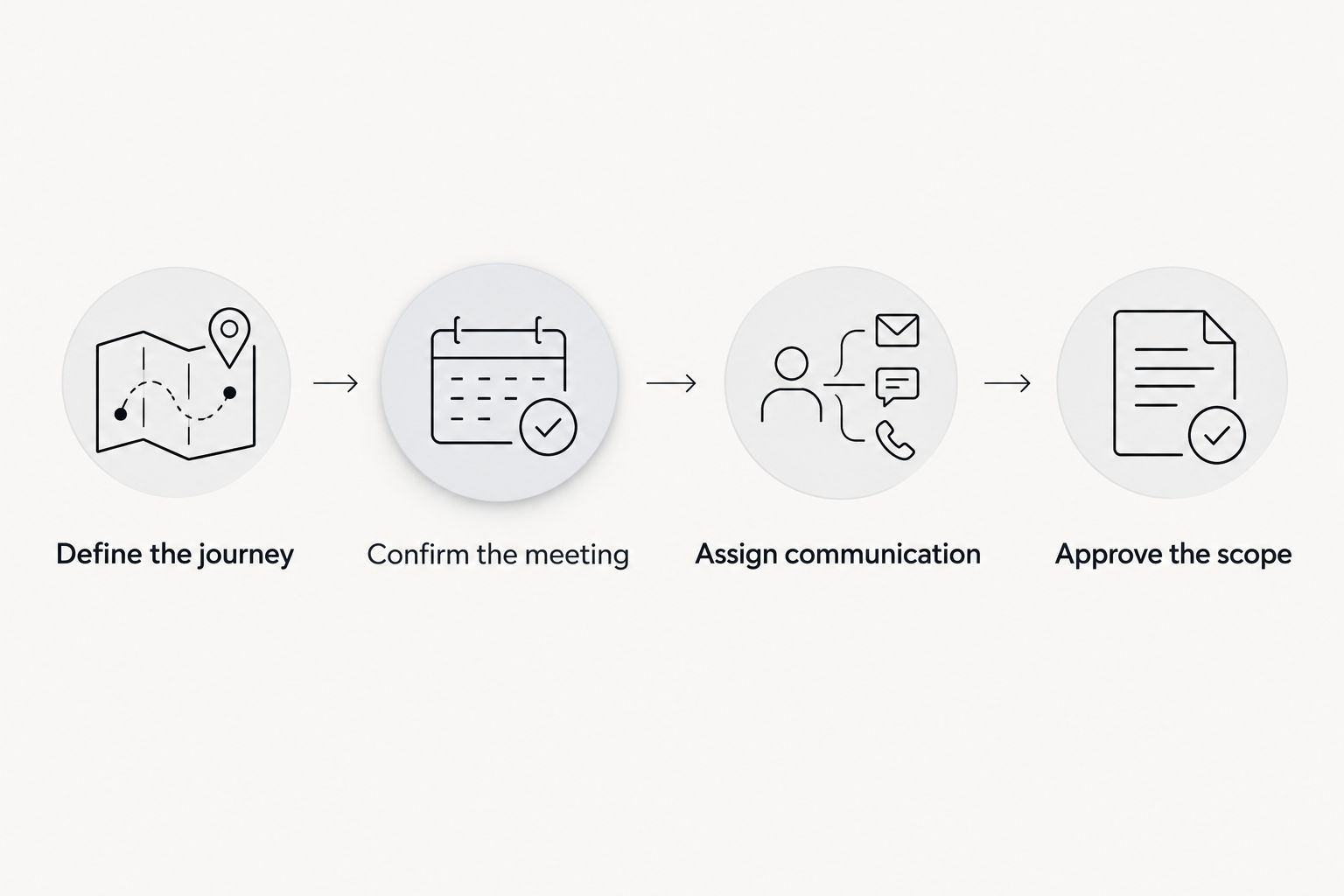
Use the following sequence before you send the final itinerary. Each step resolves a different operational question, from what is being booked to who handles an exception.
Define the journey
Provide the airport, travel date, flight number, destination address, and passenger count. Include checked luggage, unusual baggage, and any accessibility or seating requirements that affect the booking.
Describe the complete destination. A hotel name without an address, or a company name without a building entrance, leaves a detail unresolved. If the passenger needs additional stops, include them in the request rather than adding them to a calendar note later.
Confirm the meeting
Request the pickup instructions for the actual arrival. Establish whether the arrangement includes an interior meeting or another meeting procedure, and confirm how the passenger will recognize and contact the chauffeur.
Do not substitute a generic terminal instruction for booking-specific directions. Keep the final instructions accessible to both the passenger and the coordinating assistant, including any procedure for a changed arrival location.
Assign communication
Name the primary traveler contact and the coordinating assistant. Specify who receives routine updates and who receives an escalation when the passenger cannot be reached.
For a delegation, identify the person authorized to release vehicles or change destinations. A shared message thread helps distribute information, but it does not establish decision-making authority by itself.
Approve the scope
Review the journey, requested vehicle suitability, pickup arrangement, waiting terms, changes, cancellation conditions, and billing instructions. Ask for unresolved items to be clarified before approval.
Keep the confirmed booking separate from the initial request. The request records what you asked for; the confirmation records what the provider accepted. Use the confirmation when preparing the passenger's travel brief.
Airport transfer: best for a defined arrival journey
An airport transfer fits a passenger traveling from Boston Logan to an agreed destination without a continuing transport requirement. Its strength is a focused brief: one arrival, a pickup procedure, and a destination.
The limitation is scope. If the passenger wants a stop at an office before reaching a hotel, include that stop when requesting the service. Do not assume that a transfer includes discretionary stops, a prolonged appointment, or a return journey.
Before approving an airport transfer, confirm:
- The destination address and intended entrance.
- The passenger and luggage requirements.
- The arrival meeting procedure and contact method.
- The treatment of flight changes and passenger delays.
- Whether any planned stops form part of the confirmed journey.
Choose an airport transfer when the arrival journey has a clear endpoint. Treat later travel as a separate requirement unless the confirmation expressly includes it.
Hourly charter: best for an itinerary with changing stops
An hourly charter suits a schedule built around meetings, appointments, or several destinations. Describe the anticipated route and the period during which you need transport, then confirm how the booking handles changes.
The advantage is itinerary control within the agreed arrangement. The trade-off is that you need to define the booking period and clarify what happens when the schedule extends or changes materially.
For a 2026 executive visit, separate confirmed appointments from provisional ones. Mark the destinations that are fixed, identify the schedule owner, and ask how the provider wants revised instructions delivered.
Choose an hourly charter for continuing transport needs, not simply because the arrival time is uncertain. Flight-related uncertainty and an open-ended meeting schedule are different planning problems; address each in the booking brief.
Point-to-point travel: best for separate, defined journeys
Point-to-point travel suits a movement between specified addresses, such as an office departure followed by a hotel arrival. It also helps you describe later journeys separately from the airport arrival.
The advantage is a clear scope for each movement. The limitation is continuity: a confirmed journey between addresses does not establish that a chauffeur will remain available during the appointment between them.
When coordinating multiple journeys, list each origin, destination, requested departure, and passenger group. Ask how revisions to one journey affect the others before treating the itinerary as settled.
Choose point-to-point travel when each movement can stand alone. If the passenger needs continuing access to transport between uncertain departure times, discuss an hourly arrangement instead.
Why Boston Logan pickup arrangements vary
The right pickup plan depends on the journey, not just the airport name. Resolve these factors in your 2026 booking brief:
- Flight changes. Confirm how flight tracking informs the pickup plan and how revised instructions reach the traveler.
- Passenger readiness. Landing is not the same as being ready to leave. Clarify the waiting arrangement and the passenger's update procedure.
- Meeting procedure. Confirm where the handoff occurs and what the traveler should do if the chauffeur and passenger cannot locate each other.
- Passenger and baggage needs. Request a suitable vehicle arrangement based on the actual group and luggage, not the passenger count alone.
- Itinerary scope. Declare additional stops, continuing transport, and separate return journeys before approval.
- Authorization and billing. Identify who can approve changes and which account or billing reference belongs on the booking.
These are confirmation items, not reasons to leave the itinerary open. Assign an owner to each unresolved detail and close it before distributing the passenger-facing version.
What should you do if the flight changes?
Send the revised flight details through the agreed communication channel and request confirmation of the updated pickup plan. Flight tracking supports coordination, but you still need instructions for a changed flight, a missed connection, or a different arrival airport.
Give the passenger a fallback contact that remains accessible during the journey. Avoid putting the only contact details in a message thread that the traveler cannot reach without connectivity.
If the itinerary has an onward meeting, update the meeting coordinator separately. A revised airport pickup does not, by itself, revise the office arrival plan or the remaining transport schedule.
What should an executive assistant send the passenger?
Send a short, passenger-facing brief rather than the entire booking correspondence. Include the confirmed arrival procedure, destination, relevant contact, and the action to take if the meeting does not happen as planned.
Keep internal authorization and accounting instructions with the coordinating team. Share passenger details only with the people who need them to arrange the journey, and confirm any particular confidentiality requirements directly.
A useful final check is simple: can the traveler identify the next action without calling the assistant? If the answer is no, revise the instructions before departure.
How should you coordinate a delegation arrival?
Build the transport plan around named passenger groups and their destinations. Record who travels together, which arrivals belong to each group, and who can authorize a change to the assignment.
The operational benefit is a clear handoff. The limitation is that a passenger change can affect several parts of the plan, so an updated list needs an identifiable owner and a clear distribution process.
Do not describe a black car booking as a security arrangement. Confirm protocol, confidentiality requirements, and any separately managed protective responsibilities with the appropriate parties rather than assuming they are included in transport.
When Chauffyr fits the travel brief
Chauffyr is best suited to executive assistants coordinating airport transfers and multi-city executive travel. Its US-based coordination supports worldwide service through vetted chauffeurs and affiliates, with coverage across 120+ airports in 50+ countries.
Chauffyr's executive black-car services include airport transfers, hourly charters, and point-to-point travel. Flight tracking and one 24/7 desk support the coordination model; corporate accounts offer consolidated billing. Confirm the requested Boston Logan route, meeting arrangement, and service scope before finalizing the booking.
The benefit is a central coordination relationship across travel requirements. The limit is equally important: worldwide affiliate service does not mean company-owned vehicles or directly employed chauffeurs in every city, and a confirmed airport transfer does not imply continuing hourly service.
For a 2026 Boston itinerary, send Chauffyr the arrival details, passenger requirements, destination, and any onward movements through the contact page. Ask for the complete arrangement to be confirmed before circulating the itinerary.
FAQ
Is black car service available at Boston Logan Airport?
Yes, black car service is available at Boston Logan Airport through prearranged airport transfers. Confirm the specific journey, pickup procedure, passenger requirements, and booking terms before travel.
Can I book a black car before my flight to Boston?
Yes, you can arrange a Boston Logan black car transfer before your flight. Provide the travel date, flight number, destination, passenger count, and luggage requirements, then obtain written confirmation.
Where will my chauffeur meet me at Boston Logan?
Your confirmed booking instructions should specify the meeting location and procedure at Boston Logan. Ask how you will contact and identify the chauffeur, and what to do if you cannot find each other.
Does flight tracking mean I do not need to report a changed flight?
No, flight tracking does not replace communicating a changed flight or arrival airport. Send the revised details through the agreed channel and confirm the updated pickup instructions.
Is an hourly charter better than an airport transfer?
An hourly charter is the better fit when you need continuing transport for meetings or changing stops. An airport transfer fits a defined arrival journey; confirm the scope and change terms for either arrangement.
Can I arrange transport for an executive delegation?
Yes, delegation transport can be coordinated around passenger groups, flight arrivals, and destinations. Assign a schedule owner and confirm vehicle arrangements, communication, and authorization before distributing the final plan.
Does Chauffyr coordinate international executive travel?
Chauffyr coordinates executive travel across 120+ airports in 50+ countries through vetted chauffeurs and affiliates. Its US-based coordination includes one 24/7 desk; confirm each requested journey and its specific arrangements.
One last thing
Name the person who can approve a changed destination before the passenger lands. A chauffeur contact helps resolve the meeting; an authorized decision-maker resolves a changed journey. Put both roles in the coordinator's brief so an arrival exception does not become an approval search.


