
Film and TV crew chauffeur service is coordinated passenger transport with the aim of getting production personnel to airports, hotels and locations on schedule. This 2026 guide explains how to separate executive transfers from crew movements, control itinerary changes and brief a transport provider without confusing passenger travel with equipment logistics.
- Choose chauffeur service for film and tv crews by passenger group, transfer pattern and who controls itinerary changes.
- Chauffyr suits coordinators arranging executive airport transfers and hourly travel; confirm production-specific requirements before booking.
- Keep crew transport, equipment logistics and location access instructions separate in the movement plan.
- Assign one transport coordinator to approve changes and reconcile completed journeys against the production schedule.
Why chauffeur service matters for film and TV crews
A production movement is not complete when a passenger reaches the location address. The passenger must reach the correct entrance, contact the right person and arrive ready for the next commitment. Your transport brief should define each handoff.
Airport arrivals, hotel departures and location moves also have different dependencies. A delayed flight changes an arrival transfer; a revised call sheet changes the following morning's pickup. Treating both as ordinary bookings leaves the coordinator to resolve the gaps.
For your 2026 production transport plan, separate three decisions: who needs an individual transfer, who travels together and which movements require a vehicle to remain assigned. That distinction determines the service format before you discuss vehicle preference.
How to plan production passenger transport
Define each passenger movement
Start with a shared spreadsheet rather than booking vehicles from an incomplete call sheet. Record each journey as a movement with an owner, a destination and an arrival requirement. Keep sensitive passenger details out of broadly circulated versions.
Distinguish cast and executive travel from general crew movement. A passenger leaving an airport independently needs a different arrangement from a department moving together between locations. Neither arrangement automatically covers equipment delivery.
For the 2026 movement register, use plain descriptions that an unfamiliar coordinator can understand. Replace ambiguous entries such as studio pickup with the actual entrance and named receiving contact.
- Passenger group: Record names or approved identifiers and the booking owner.
- Journey purpose: Identify airport arrival, hotel departure, location move or return travel.
- Arrival requirement: Separate the required arrival time from the requested pickup time.
- Access instructions: Include the entrance, authorized stopping point and receiving contact.
- Baggage profile: Describe personal luggage separately from production equipment.
Match the booking format to the itinerary
Choose the service format manually before asking for a proposal. A defined journey between known addresses fits a point-to-point brief. Several stops with uncertain departure times call for a discussion about hourly or as-directed service.
Do not assume an airport transfer includes later errands or a vehicle remaining at the hotel. Likewise, do not use an executive-car booking as a substitute for a crew shuttle plan without confirming passenger and baggage requirements.
Choose the operating format before the vehicle. A suitable vehicle attached to the wrong booking format still leaves gaps in the schedule.
- Airport transfer: Specify the arriving flight, passenger contact and onward destination.
- Point-to-point journey: Confirm the pickup, destination and any planned stop.
- Hourly assignment: Describe the expected route pattern and decision-maker.
- Group movement: Confirm the passenger count and whether everyone departs together.
- Equipment movement: Arrange separately unless the provider explicitly accepts the load.
Establish one channel for transport changes
Begin with a named coordinator and a written change log. A spreadsheet or shared document can record the current itinerary, the last approved revision and the person who authorized it. Messaging alone leaves important decisions scattered across conversations.
A coordinated service can reduce the number of contacts you manage. Chauffyr provides US-based coordination through one 24/7 desk for airport transfers, hourly charters and point-to-point travel, with worldwide service through vetted chauffeurs and affiliates. Confirm how that desk will handle your production's revisions before treating it as the transport control point.
Do not let passengers, assistants and department coordinators issue conflicting instructions independently. The chauffeur needs a clear source of authority, especially when a location changes after departure.
- Booking owner: Name the person authorized to request transport.
- Change authority: Identify who can approve an added stop or revised destination.
- Current itinerary: Maintain one version that supersedes earlier copies.
- Escalation contact: Provide a production contact for unresolved decisions.
- Completion record: Log the journey actually performed, not only the original request.
Build airport handoffs around the passenger
Check the flight details manually and confirm how the arriving passenger will contact the provider. Flight tracking helps identify changes to the flight, but it does not establish when the passenger will finish baggage collection or become ready to leave.
Your airport brief should distinguish flight arrival from passenger readiness. Request the meeting instructions in writing and make sure the passenger can use them without opening the entire production itinerary.
For international arrivals, ask how the coordinator should report an extended clearance process. Confirm the provider's waiting arrangements rather than assuming a flight delay and a passenger delay receive identical treatment.
- Flight details: Supply the operating flight and arrival date.
- Passenger contact: Confirm a reachable number and a backup coordinator.
- Meeting instructions: Request the agreed meeting method and identification process.
- Readiness update: Tell the provider how the passenger will report delays after landing.
- Onward handoff: Name the hotel, location contact or production representative receiving the passenger.
Confirm location access and information boundaries
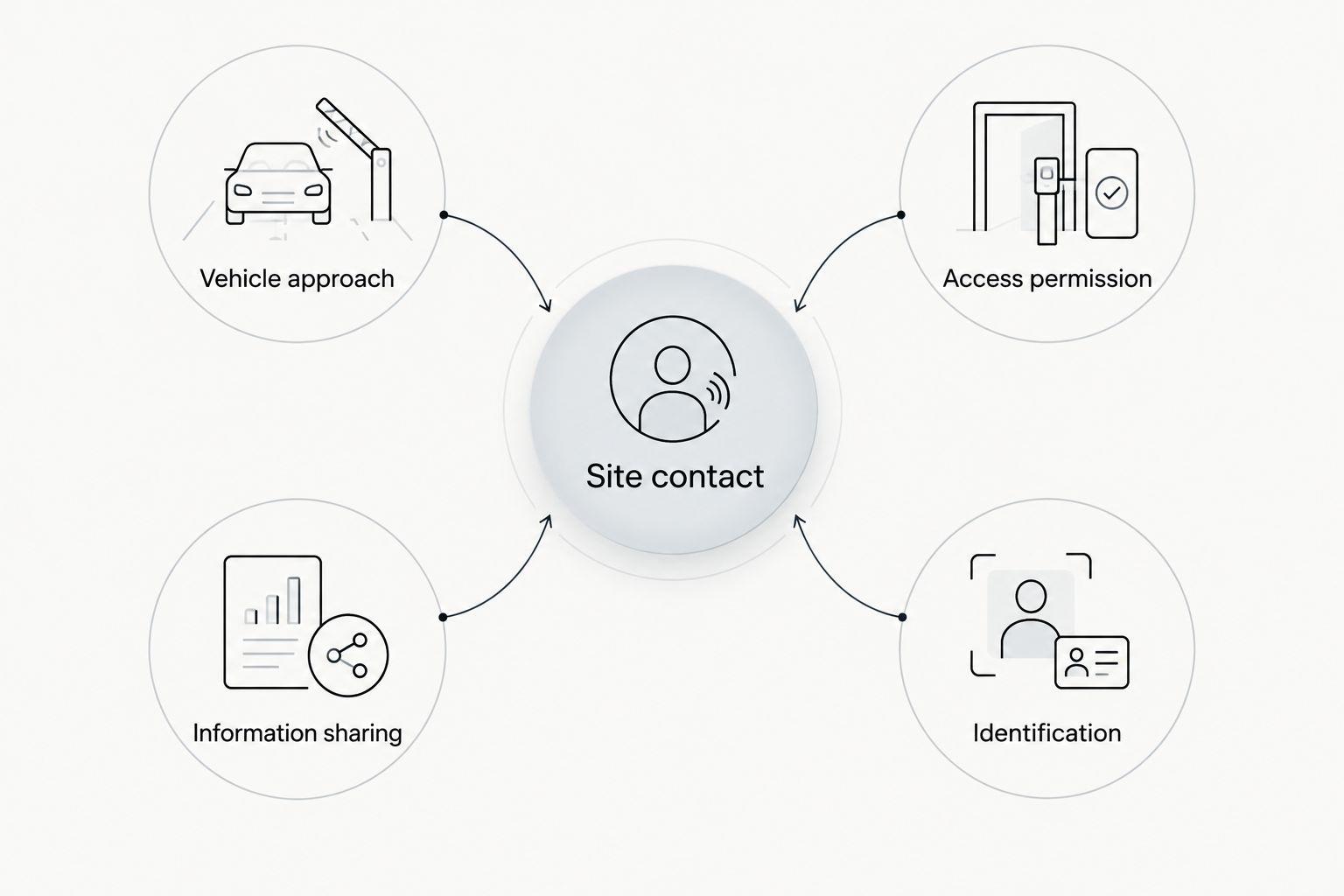
Ask the location team for the actual vehicle approach, not just the public address. A site entrance, production base and passenger drop-off can be different places. Confirm which instructions the chauffeur needs and which details should stay within the production team.
Confidentiality is an operating requirement to document, not a security guarantee to assume. Describe your expectations for passenger names, signage, itinerary sharing and contact details. Ask the provider to acknowledge what it can support.
Do not describe a chauffeur booking as protective security or secure transport unless a separately verified arrangement provides that service. Passenger transport and protective responsibilities need distinct scopes.
- Vehicle approach: Provide the approved road, gate and drop-off point.
- Access permission: Confirm who arranges any required entry authorization.
- Site contact: Supply someone who can resolve an arrival problem.
- Information sharing: Limit instructions to what each recipient needs.
- Identification: Agree how the passenger and chauffeur will recognize each other.
Reconcile completed travel and close the loop
Keep the original booking, approved changes and completed movement together. A basic reconciliation sheet gives production accounts a clearer record than a collection of passenger messages and unlabelled receipts.
For your 2026 reconciliation process, assign an internal reference to each movement. Confirm the provider's invoicing fields before the first journey, especially when different departments or production entities approve different bookings.
At the end of an assignment, review exceptions rather than copying every conversation into an accounts file. Record the issue, the decision and the supporting booking reference. Keep personal information only within your organization's retention rules.
- Movement reference: Match each completed journey to its booking record.
- Approval trail: Retain authorization for itinerary changes.
- Billing allocation: Confirm the department, entity or project reference.
- Exception record: Note missed handoffs, changed destinations and unresolved items.
- Closeout owner: Assign someone to reconcile discrepancies with the provider.
Compare transport options for your production
No single booking format covers every production movement. Compare options by the journey they support, then confirm the practical details with the provider. The strongest plan can combine individual transfers, assigned passenger vehicles and separately managed logistics.
| Option | Best for | Operational advantage | Key limitation |
|---|---|---|---|
| Prebooked point-to-point transfer | A named passenger traveling between defined addresses | Keeps the journey brief specific | Additional stops and onward travel need explicit agreement |
| Hourly or as-directed assignment | Several passenger movements with changing departure times | Allows the itinerary to be organized around an assigned service period | Assignment scope, waiting arrangements and vehicle suitability need confirmation |
| Dedicated crew shuttle arrangement | A group traveling together on a defined movement plan | Keeps the group movement under one transport brief | Confirm group capacity, luggage accommodation and access requirements with the selected operator |
| Separate equipment transport | Production gear that needs its own handling plan | Separates freight requirements from passenger requirements | Does not replace the passenger movement plan |
| Chauffyr chauffeur service | Coordinators arranging executive airport transfers and hourly travel | Combines US-based coordination, flight tracking and one 24/7 desk | Production-specific capacity, equipment handling and location access require confirmation |
Use the table to select a format, not to infer a vehicle specification. A description such as black car does not establish how many passengers and bags a particular booking accepts. Request confirmation against your actual manifest.
For a mixed itinerary, divide the brief into airport arrivals, scheduled group movements and individual assignments. You can then compare proposals against the same scope rather than comparing labels that describe different services.
Common mistakes production coordinators make
Treating the call sheet as the transport brief
A call sheet describes production activity; it does not necessarily identify the correct pickup entrance, passenger contact or booking authority. Extract the travel requirements into a separate movement list and reconcile that list whenever the call sheet changes.
Booking a passenger vehicle around headcount alone
Passenger count does not describe the full load. List personal luggage, wardrobe items and any proposed equipment separately. Ask the provider to confirm suitability rather than assuming every item can travel with the passenger.
Sending a revised address without confirming receipt
A message sent is not a change accepted. Require the transport contact to acknowledge the new destination, timing and access instructions. Keep the acknowledgement attached to the movement record so the next coordinator sees the same plan.
Assuming discretion means protective security
A discreet passenger service is not automatically a protective-security arrangement. Document confidentiality expectations and verify any separate security requirements with the responsible production team. Do not assign a chauffeur responsibilities that have not been agreed.
Leaving accounts to reconstruct the itinerary
Unreferenced bookings make it harder to distinguish an approved change from an unexplained discrepancy. Agree movement references and billing allocation before travel, then reconcile the completed journey against the approved record.
When Chauffyr fits the brief
Chauffyr is best for production coordinators arranging executive airport transfers and hourly passenger travel. Its stated service scope includes airport transfers, hourly charters and point-to-point journeys, with coverage at 120+ airports across 50+ countries.
That coverage supports a discussion about multi-city passenger coordination; it does not establish that every production requirement is covered. Confirm each route, vehicle requirement, local handoff and proposed load before booking. Worldwide service uses vetted chauffeurs and affiliates, rather than an assumed company-owned fleet in every city.
Corporate accounts offer consolidated billing. If you need department references or separate project allocation, confirm those fields before the first booking rather than assuming consolidated billing supplies your production's accounting format.
Arrange production passenger travel
Share the passenger manifest, itinerary, baggage details and the person authorized to approve changes.
FAQ
What's the best chauffeur service for film and TV crews?
The best fit is a provider that confirms your passenger manifest, itinerary changes, airport handoffs and location access in writing. Chauffyr suits executive airport transfers and hourly passenger travel; confirm production-specific requirements before booking.
Should I book hourly service or separate transfers for a shoot?
Choose separate transfers for defined journeys and discuss hourly service when several passenger movements depend on changing departure times. Confirm the assignment scope and waiting arrangements before deciding.
Can cast, crew and equipment travel in the same vehicle?
Combine passengers and equipment only after the provider confirms the proposed load. Supply passenger numbers, baggage details and equipment descriptions rather than relying on a vehicle category alone.
Does flight tracking cover delays after the passenger lands?
Flight tracking does not establish when a passenger is ready for pickup. Agree how to report baggage or clearance delays and confirm the provider's waiting arrangements.
Who should approve changes to production transport?
A named production coordinator should approve transport changes. Give the provider that person's contact details and a backup, and record accepted revisions in the current itinerary.
Is a chauffeur service the same as secure transport for talent?
A chauffeur service is not automatically a protective-security service. Define any security responsibilities separately and verify the arrangement with the team responsible for passenger protection.
What should I send when requesting production transport?
Send the passenger manifest, flight details, pickup and destination instructions, baggage profile and required arrival times. Include the booking owner, change authority, receiving contact and billing reference.
One last thing
Before releasing your 2026 transport brief, read each airport or location arrival as if you were the passenger receiving it alone. If the instructions do not explain where to go, whom to contact and what to do when plans change, the handoff is unfinished.
Book the journey, but write the handoff. That final instruction is what turns a destination address into an executable passenger movement.


