
Yes. For an as-directed pickup in Los Angeles, book an hourly chauffeur arrangement and have the pickup location, start time, stops, and change instructions confirmed before travel. That arrangement supports an evolving itinerary; it does not mean an unconfirmed, immediate pickup or unrestricted changes outside the booking terms.
- As directed chauffeur service Los Angeles: choose an hourly arrangement when your itinerary needs waiting and changing stops.
- Confirm the pickup point, service window, waiting terms, and person authorized to change the itinerary.
- Use a point-to-point transfer when you need a defined journey rather than continued chauffeur attendance.
- Chauffyr serves executive travel coordinators who need hourly charters and one 24/7 desk.
Why this matters
A meeting that runs late creates a different transport requirement from a straightforward office-to-hotel journey. You need to establish whether the chauffeur remains assigned, how instructions reach the chauffeur, and what happens when the original schedule changes.
Book the operating arrangement, not just the pickup. Compare the relevant chauffeur services against your itinerary, then request written confirmation of the terms that matter. For your 2026 travel brief, separate confirmed movements from stops that remain tentative.
An executive assistant should not have to resolve an unclear waiting arrangement while the passenger is leaving a meeting. Make those decisions before the vehicle is dispatched, including who can approve an extension and who receives operational updates.
Can a chauffeur pick me up as directed in Los Angeles?
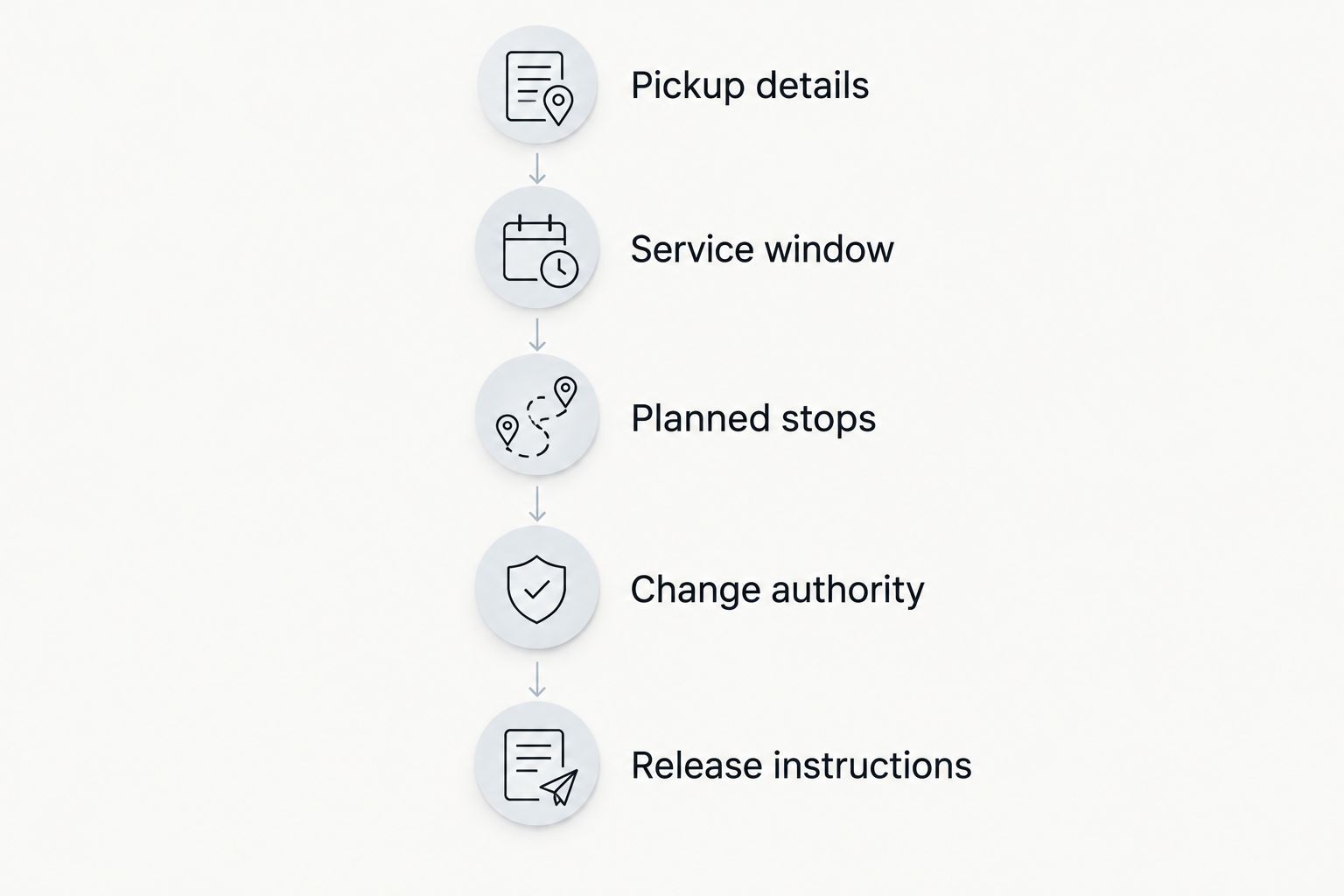
Yes, provided the provider accepts and confirms an as-directed booking for your requested movement. Use the following sequence to turn a general request into instructions a dispatch team can act on.
- Pickup details. Give the exact address, requested start time, passenger contact, and any building access instructions. Distinguish the time the vehicle should be ready from the time the passenger expects to leave.
- Service window. State when you need the assignment to begin and when you expect to release the vehicle. Identify any uncertainty around the end time rather than treating an extension as automatic.
- Planned stops. List confirmed destinations in order. Mark tentative meetings clearly, and explain whether the chauffeur should wait during each appointment or whether the booking needs a different arrangement.
- Change authority. Name the person who can approve a new destination, revised departure, or longer assignment. State whether the passenger can give instructions directly or whether changes must pass through the coordinator.
- Release instructions. Agree on how the assignment ends and who communicates that decision. Do not leave the chauffeur and coordinator with different assumptions about whether another movement is still expected.
The resulting confirmation should describe the actual assignment, not simply repeat the words as directed. If a key detail remains unresolved, resolve it before treating the itinerary as final.
Which booking arrangement fits your itinerary?
Choose the arrangement by what you need the chauffeur to do between movements. An hourly assignment and a transfer solve different problems; neither label alone establishes waiting rules, amendment terms, or the exact pickup procedure.
| Arrangement | Best for | Operational advantage | Limitation to resolve |
|---|---|---|---|
| Hourly/as-directed charter | Meetings with changing departure times or several stops | Plans chauffeur attendance around an assignment window | Confirm waiting, extensions, permitted movements, and release terms |
| Point-to-point transfer | A defined journey between locations | Gives the movement a clear origin and destination | Do not assume continued attendance after arrival |
| Airport transfer | A scheduled airport arrival or departure | Organizes the journey around a flight and airport pickup brief | Confirm the meeting procedure, waiting terms, and onward stops |
Choose hourly/as-directed travel when continued attendance is the requirement. Choose a transfer when the requirement ends at the destination. If the itinerary combines both needs, describe each part explicitly rather than expecting the provider to infer the structure.
Hourly/as-directed charter: best for an evolving schedule
An hourly/as-directed request fits a day built around meetings, intermediate stops, and departures that are not fully settled. Your booking brief should explain both the planned route and the decisions that remain open.
The advantage is itinerary control within the confirmed assignment. The trade-off is that you must define the service window and amendment process; an open-ended description does not establish unlimited operating scope.
For a 2026 executive meeting day, label each appointment as confirmed or tentative. Include the passenger-ready time wherever it differs from the meeting end time, and ask how the dispatch desk wants to receive revisions.
Point-to-point transfer: best for a defined movement
A point-to-point transfer fits a journey with an agreed pickup and destination. It is the clearer request when you do not need the chauffeur to remain assigned after arrival.
Its limitation is continued attendance. If you expect a return journey after a meeting, include that requirement in the request and obtain confirmation of how it will be handled. Do not treat the return as part of the original movement unless the booking says so.
Airport transfer: best for a flight-linked journey
An airport transfer fits a movement whose timing depends on an arrival or departure. Supply the flight details and request the exact passenger meeting procedure, including how the traveler receives instructions.
The limitation is scope: an airport transfer does not, by its name alone, establish an onward as-directed assignment. If the passenger will leave the airport for several meetings, describe the entire sequence and ask where the transfer ends and the hourly arrangement begins.
Why an as-directed assignment varies
An as-directed request needs more detail than a destination alone. These factors determine what the provider must confirm:
- Assignment length. A clearly bounded service window gives dispatch a usable start and expected release. An uncertain finish needs an agreed extension process.
- Stop sequence. Fixed appointments and tentative destinations require different instructions. Mark which stops are essential and which depend on the passenger's decisions.
- Waiting requirements. Explain where continued attendance is needed. Ask how the passenger should request the vehicle when ready to depart.
- Airport connection. A flight-linked start requires flight details and a meeting procedure. An office pickup requires address and access instructions instead.
- Passenger requirements. Share the passenger count, luggage needs, and relevant access requirements. Request confirmation of a suitable vehicle rather than assuming a particular configuration.
- Instruction ownership. A single coordinator and several independent decision-makers create different communication demands. Identify who has final authority when instructions conflict.
Keep these items in the booking brief for 2026 rather than spreading them across separate messages. A readable, current brief is more useful than a long conversation containing superseded instructions.
What should your pickup brief include?
Make the brief usable by someone who has not attended the planning calls. A street address without the correct entrance, for example, does not tell the chauffeur where the passenger expects to meet.
Use this checklist before you request confirmation:
- Pickup address and relevant entrance or access instructions.
- Service date, local start time, and expected release time.
- Passenger name and a reachable day-of-travel contact.
- Passenger count, luggage needs, and relevant access requirements.
- Confirmed destinations, with tentative stops identified separately.
- Meeting end times and passenger-ready times where they differ.
- Coordinator contact and authority to approve itinerary changes.
- Requested waiting arrangement and return-to-vehicle procedure.
- Billing contact and any required booking references.
- Contingency contact if the original coordinator becomes unreachable.
Share only the passenger information needed to operate the journey. If discretion matters, specify how the passenger should be identified and who may receive itinerary updates. Do not assume a particular privacy procedure applies without confirmation.
For repeated assignments, retain the stable traveler details and refresh the trip-specific instructions. Reusing an old itinerary without checking the pickup entrance, contact, and release time carries old decisions into a new movement.
Can I change destinations after pickup?
You can request destination changes during an as-directed assignment, but the confirmed booking terms determine what the provider accepts. Give the revised destination to the agreed contact and obtain acknowledgment before treating the change as settled.
A useful change message identifies the new stop, desired departure, and whether later appointments still apply. If the change affects the expected release time, request that amendment explicitly rather than leaving dispatch to infer it.
Will the chauffeur wait while I attend meetings?
Waiting must be included in the confirmed arrangement. State which meetings require continued attendance and ask how to summon the vehicle when the passenger is ready.
Do not assume that waiting means the vehicle can remain immediately outside every entrance. Confirm the meeting procedure and contact method, especially when the pickup point differs from the drop-off location.
Can an airport pickup become an as-directed assignment?
An airport pickup can be requested as the start of an as-directed assignment, subject to the provider's confirmation. Include the flight, onward stops, expected waiting, and release plan in the original request.
For a 2026 arrival brief, distinguish flight monitoring from passenger readiness. Flight details help coordinate the arrival; the meeting instructions still need to explain how the traveler and chauffeur connect after landing.
Confirm contingencies before the travel day
A useful contingency plan tells people what to do, not simply whom to call. Establish the response for a late passenger, a changed meeting address, an unreachable coordinator, and an assignment that needs to run longer.
Ask who acknowledges each change and who confirms any effect on the booking. Keep operational instructions separate from approvals when different people handle them: the passenger can communicate readiness while the designated coordinator handles amendments.
Before confirming a 2026 assignment, request a final written summary. Check that it contains the latest pickup details, the intended booking arrangement, and the agreed contact route. Discard superseded versions from the active travel brief.
Do not release the vehicle until the authorized person has confirmed that the assignment is complete. Equally, do not assume the vehicle remains assigned after the agreed release without an accepted extension.
Where Chauffyr fits
Chauffyr is an executive chauffeur partner for coordinators who need hourly charters and one 24/7 desk. Its US-based coordination supports worldwide service through vetted chauffeurs and affiliates; that does not mean a company-owned fleet in every city.
Chauffyr's stated network covers 120+ airports across 50+ countries. Its executive chauffeur services include airport transfers, hourly charters, and point-to-point travel, with flight tracking, fixed, upfront pricing, and no surge. Corporate accounts offer consolidated billing.
Those features do not replace a trip-specific confirmation. For Los Angeles as-directed travel, submit the actual pickup, service window, stops, and passenger requirements. Have the local operating arrangement, waiting terms, and change process confirmed for your assignment.
Arrange your Los Angeles travel
Send your pickup, service window, planned stops, and passenger requirements for a trip-specific quote.
FAQ
What does as-directed chauffeur service mean in Los Angeles?
As-directed chauffeur service is an arrangement built around your instructions during a confirmed assignment, typically requested as an hourly charter. Confirm the service window, stops, waiting requirements, and amendment terms before travel.
Can I request an immediate as-directed pickup in Los Angeles?
You can request an immediate pickup, but the request is not a confirmed assignment. Obtain acceptance of the location, start time, vehicle requirements, and operating terms before relying on the pickup.
Is an hourly chauffeur better than a point-to-point transfer?
An hourly chauffeur arrangement is the better fit when you need continued attendance and changing stops. A point-to-point transfer fits a defined movement that ends at the agreed destination.
Can my executive assistant manage itinerary changes?
Your executive assistant can be named as the authorized coordinator in the booking instructions. Confirm how the coordinator submits changes and how dispatch acknowledges them.
Does flight tracking include an onward hourly charter?
Flight tracking does not establish an onward hourly charter by itself. Request the airport pickup and subsequent assignment together, then confirm the scope of each part.
What should I confirm about waiting during meetings?
Confirm whether continued attendance is included, how the passenger requests the vehicle, and what happens if the meeting runs beyond the agreed service window. Do not assume the vehicle can wait at the exact drop-off point.
Does Chauffyr own vehicles in every service city?
Chauffyr provides US-based coordination and worldwide service through vetted chauffeurs and affiliates. Its network description does not establish company-owned vehicles or direct chauffeur employment in every city.
One last thing
The release instruction deserves as much attention as the pickup instruction. An itinerary can contain every destination and still leave the end of the assignment unclear. Put the authorized release contact in the booking brief, and ask for acknowledgment when the vehicle is released.


