
Best for budget control: a fixed, upfront chauffeur quote. Best for changing itineraries: an hourly charter with written terms. Best for preliminary approvals: an itemized estimate. This 2026 black car service pricing transparency guide ranks booking formats by how clearly you can establish the charge before travel—not by vehicle appearance or an unverified comparison of operators.
- Chauffyr is best for executive travelers who want fixed, upfront chauffeur quotes and no surge.
- Black car service pricing transparency requires written inclusions, change rules, and billing terms—not just a displayed fare.
- Hourly charters fit changing itineraries when the billing period and extension terms are documented.
- Treat an itemized estimate as provisional until the provider confirms the final scope and charge.
Why this matters
A quoted transfer and an approved transfer are not the same thing. Your finance team needs to know what the quote covers, which changes require authorization, and what will appear on the invoice.
For executive assistants and delegation coordinators, the practical issue is control. A principal changes the departure time, a flight moves, or an additional stop enters the itinerary. The booking should explain how those changes affect the charge before you need to make them.
Use this 2026 ranking to choose a booking structure, then review the provider's written terms. The pricing page is a starting point; the trip-specific confirmation is the document your approver needs.
What makes black car pricing transparent?
A clear quote answers operational questions as well as financial ones. Assess each booking against these criteria before accepting its headline amount:
- Charge certainty: Does the document state a fixed charge, an estimate, or a calculation method?
- Defined scope: Does it identify the route, service period, stops, passenger requirements, and requested vehicle category?
- Inclusions and exclusions: Does it explain the treatment of waiting, parking, tolls, gratuities, and other applicable charges?
- Change control: Does it state what happens when the itinerary, timing, or service duration changes?
- Invoice traceability: Can your finance team match the invoice to the approved booking and authorized amendments?
A fixed quote is useful only when you understand the service it fixes. Do not treat “fixed” and “all-inclusive” as interchangeable. Ask for the inclusions rather than inferring them from the wording.
Pricing transparency at a glance
This ranking favors charge certainty for a defined itinerary. It does not rank chauffeur quality, vehicle specifications, or individual competitors.
| Rank and booking format | Best for | Transparency strength | Key limitation |
|---|---|---|---|
| 1. Chauffyr fixed, upfront quote | Executive travel with a defined scope | Fixed upfront quotes and no surge | Changes still need documented treatment |
| 2. Hourly charter | Meetings and itineraries with changing stops | A defined service period can organize the booking | Extensions and scope changes need explicit terms |
| 3. Itemized preliminary estimate | Internal planning and approval | Separates the proposed charge into reviewable components | An estimate does not establish a final charge |
| 4. Variable-fare booking | A single journey approved at booking | A displayed fare can support a trip-specific decision | The displayed amount needs a clear confirmation status |
1. Chauffyr: best for fixed-scope executive travel
Chauffyr provides executive black-car airport transfers, hourly charters, and point-to-point travel with fixed, upfront quotes and no surge. For a defined airport transfer or scheduled journey, that structure gives your approver a stated charge to assess before the trip.
Chauffyr is best for executive travelers who want fixed, upfront chauffeur quotes and no surge. The purchasing advantage is the stated charging approach, not an assumption that every possible itinerary amendment is included.
Chauffyr pros
- Fixed upfront quotes support approval before travel.
- No surge removes surge-based changes from the quoted pricing approach.
- Corporate accounts offer consolidated billing.
- One 24/7 desk provides a coordination contact for the booking.
Chauffyr cons and limits
- A fixed quote still needs a clearly documented itinerary and service scope.
- The booking must establish the treatment of waiting, additional stops, and amendments; the phrase “no surge” does not answer those questions.
- Travelers seeking an open-ended itinerary need to define an appropriate service format rather than assume a transfer covers ongoing use.
Best for: Executive assistants, finance teams, and law firms arranging a defined journey that requires advance approval.
For your 2026 travel brief, request a quote that identifies the passenger requirements, airport or pickup location, destination, and relevant timing. Ask the coordinator to record any authorized changes against that booking.
Verdict: Buy for a defined itinerary once the written scope and change terms meet your approval requirements.
2. Hourly charter: best for changing meeting itineraries
An hourly charter organizes travel around a service period rather than a single origin and destination. It suits a schedule where the traveler needs transport between meetings but the sequence of stops remains subject to change.
The transparency question shifts from “What does this transfer cover?” to “What starts, extends, and ends the billable period?” Review the chauffeur services that fit your itinerary, then request those boundaries in writing.
Hourly charter pros
- A service period gives the coordinator a clear framework for planning.
- The itinerary can describe multiple intended stops without presenting each as an unrelated booking.
- Written extension terms give an assistant a basis for authorizing additional time.
Hourly charter cons
- An undefined end time leaves the final charge unresolved.
- A nominal hourly structure does not explain minimum booking requirements, rounding, or extensions.
- You still need confirmation of route boundaries and any excluded charges.
Best for: Meeting days where the principal's stop sequence changes but the coordinator can define the intended service window.
Before approval, ask when billing begins and ends. Confirm how an extension is requested, who can authorize it, and how the change will be documented. Do not infer these terms from the word “hourly.”
Verdict: Buy for changing meeting schedules after confirming the service window and extension rules.
3. Itemized estimate: best for preliminary approval
An itemized estimate separates a proposed charge into components. That makes it useful when your team is developing an itinerary, comparing scopes, or identifying which travel requirements need approval.
Itemization is a presentation method, not a promise that the final charge is fixed. A detailed estimate can still leave important variables unresolved.
Itemized estimate pros
- Separates components so an approver can question individual entries.
- Helps reveal differences between competing scopes.
- Supports planning before the itinerary is final.
Itemized estimate cons
- Detailed line items do not establish a final total.
- Unresolved allowances or exclusions still require clarification.
- Comparing estimates is unreliable when providers use different assumptions.
Best for: Travel managers preparing an internal brief before passengers, timing, and routing are confirmed.
For a 2026 delegation plan, give each provider the same itinerary version. Ask each to distinguish confirmed charges from unresolved items and state what information is needed to issue the final booking confirmation.
Do not approve an estimate merely because it contains more detail. Approve it for planning, then obtain the final terms before treating the journey as financially settled.
Verdict: Hold for planning; obtain a confirmed quote before final travel approval.
4. Variable-fare booking: best for a single trip decision
A variable-fare booking presents a charge tied to the booking conditions at the time of the request. It fits a traveler making an individual trip decision when the fare and booking terms can be reviewed together.
The key distinction is between an indicative display and a confirmed charge. Read the confirmation rather than assuming that an earlier screen remains binding.
Variable-fare booking pros
- A displayed fare gives the traveler something concrete to review before accepting.
- A trip-specific decision avoids committing to a longer service period.
- The confirmation can provide a record of what the traveler approved.
Variable-fare booking cons
- An earlier display does not explain the final charge unless its status is explicit.
- A fare alone does not establish waiting, cancellation, or amendment terms.
- Separate trip approvals can complicate a coordinated multi-stop itinerary.
Best for: A traveler authorizing a single journey without a broader delegation or meeting-day transport brief.
Save the accepted confirmation and check how changes are handled. If the journey forms part of a managed corporate itinerary, confirm that the booking record satisfies your company's approval and expense requirements.
Verdict: Buy only when the accepted fare and conditions satisfy the trip's approval requirements.
How the ranking works
The order follows the criteria above: charge certainty, defined scope, inclusions, change control, and invoice traceability. A fixed upfront quote ranks first for a defined journey because it establishes the charge before travel; an hourly charter better matches a changing service window.
An itemized estimate ranks below a confirmed arrangement because itemization alone does not finalize the charge. A variable-fare booking belongs with an individual trip decision, not automatically with a centrally managed itinerary. This is a purchasing framework, not a claim that named competing services were tested.
Turn the quote into an approval record
For your 2026 booking process, keep the itinerary, quote, amendments, and invoice connected. A clear approval record explains what was requested and who accepted any change.
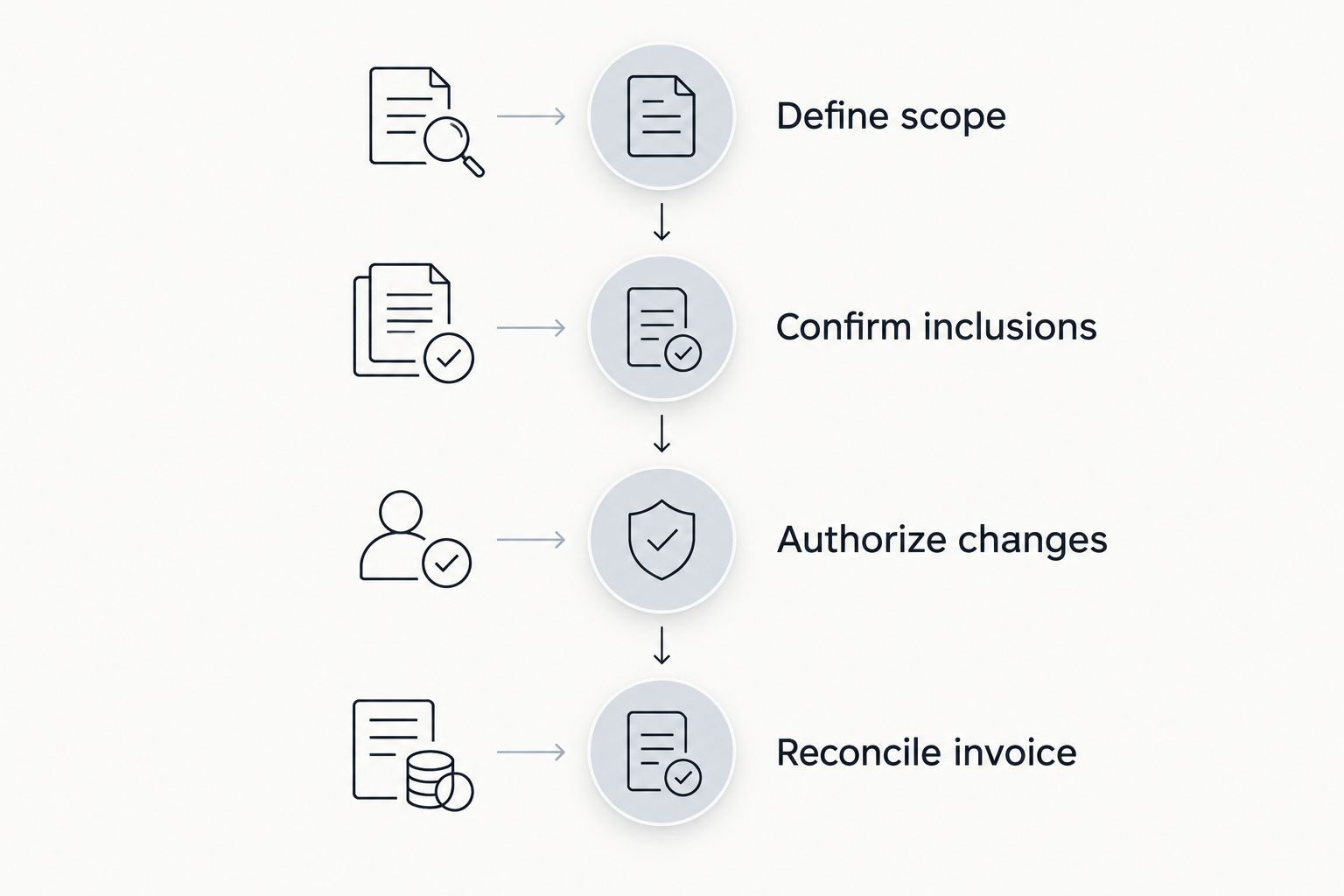
Use this sequence before confirming transport:
- Define scope: Record the route, timing, stops, passenger requirements, and intended service format.
- Confirm inclusions: Request written treatment of applicable extras and exclusions.
- Authorize changes: Name the person permitted to approve amendments.
- Reconcile invoice: Match the final invoice to the confirmed scope and authorized changes.
The same discipline applies to airport arrivals. Provide the flight details, request the pickup instructions, and clarify the treatment of waiting. Flight tracking supports coordination; it does not replace a written explanation of chargeable time.
For diplomatic or confidential travel, also identify the authorized operational contact. Keep unnecessary personal information out of the billing narrative while retaining enough detail for reconciliation.
Which booking format should you choose?
Choose a fixed, upfront quote for a defined executive journey. Choose an hourly charter when the service window matters more than a fixed stop sequence. Keep preliminary estimates in the planning stage until the provider confirms the scope and charge.
Chauffyr provides US-based coordination through vetted chauffeurs and affiliates, serving 120+ airports across 50+ countries. Its executive black-car service combines flight tracking, one 24/7 desk, fixed upfront quotes, and no surge; corporate accounts offer consolidated billing.
Use those capabilities to frame your request, not to skip trip-specific questions. For a multi-city brief, identify each journey, the coordinating contact, and the billing requirements. Arrange executive travel with the itinerary attached so the quote addresses the actual assignment.
Get a quote for your itinerary
Provide your route, timing, stops, and billing requirements for a trip-specific quote.
FAQ
What's the best black car booking format for pricing transparency?
A fixed, upfront quote is the strongest starting point for a defined journey. Check the written scope, inclusions, and amendment terms before approval.
Does no surge mean every additional charge is included?
No. No surge describes the pricing approach, not the treatment of every possible extra. Ask how waiting, parking, tolls, additional stops, and amendments are handled.
Is an hourly charter better than a point-to-point transfer?
An hourly charter better fits a changing meeting itinerary; a point-to-point transfer fits a defined journey. Compare the service scope and billing rules rather than choosing by the format's name alone.
Is an itemized estimate the same as a fixed quote?
No. An itemized estimate separates proposed charges but does not establish that the total is fixed. Request confirmation of unresolved items before final approval.
How does Chauffyr support executive travel coordination?
Chauffyr provides US-based coordination through vetted chauffeurs and affiliates, with flight tracking and one 24/7 desk. Its services include airport transfers, hourly charters, point-to-point travel, and coordinated delegation transport.
What should an assistant confirm before approving an airport transfer?
Confirm the flight details, pickup instructions, destination, included service, and treatment of waiting and changes. Identify the person authorized to approve amendments.
What should finance check on a chauffeur invoice?
Finance should match the invoice to the confirmed booking and authorized amendments. Check that the billed service, relevant trip references, and applicable charges correspond to the approval record.
One last thing
For your next 2026 booking, ask: “What change would require a revised quote?” The answer tests the boundary of a fixed charge more directly than asking whether the service is transparent.
Record that answer with the confirmation. Your assistant, traveler, coordinator, and finance team should be working from the same terms.


