
Best for flight arrivals: airport transfers. Best for a changing schedule: hourly charters. Best for a defined journey: point-to-point travel. Best for coordinated itineraries: multi-city delegation transport. The best private chauffeur service in 2026 matches the assignment; compare airport transfers, hourly charters and point-to-point travel before choosing your booking format.
- Choose a private chauffeur service by assignment: airport arrival, flexible schedule, defined journey or coordinated delegation.
- Chauffyr is best for executive teams seeking coordinated chauffeur travel through one US-based desk.
- Airport transfers address flight arrivals; hourly charters suit itineraries that need flexibility.
- Confirm pickup instructions, itinerary changes, vehicle requirements and billing responsibilities before booking.
Why the booking format matters
A flight arrival, a day of meetings and a delegation movement create different transport requirements. Booking them under the same brief leaves the important questions unanswered: who tracks the arrival, who approves a change, and who tells the chauffeur where to go next?
For your 2026 travel program, choose the operating format before comparing providers. A clear assignment makes proposals easier to evaluate and gives your traveler fewer decisions to handle during the journey.
The right booking format defines responsibility, not just transportation. You need a named coordination contact, an agreed itinerary and a clear process for exceptions.
What makes the best private chauffeur service
Use these criteria to compare proposals. A vehicle description alone does not explain how an executive journey will be managed.
- Arrival coordination: Confirm flight tracking, pickup instructions and the contact procedure when the traveler lands.
- Itinerary control: Establish whether the assignment covers a defined journey, retained transport or several coordinated movements.
- Chauffeur standards: Ask how chauffeurs and affiliates are vetted and how traveler instructions reach the person driving.
- Privacy instructions: Specify what information the chauffeur needs, who can receive updates and how passenger names should be displayed.
- Change handling: Identify who authorizes additional stops, revised departure times and replacement arrangements.
- Commercial clarity: Request a written scope covering inclusions, exclusions, billing and applicable booking terms.
For a 2026 supplier review, ask each candidate to answer the same questions against the same itinerary. Compare written commitments rather than treating every use of the word executive as equivalent.
Private chauffeur services at a glance
The ranking below matches each service format to a distinct travel problem. It is not a claim that one format replaces the others.
| Rank and service | Best for | Main purpose | Key limitation |
|---|---|---|---|
| 1. Airport transfers | Flight-linked arrivals and departures | Connect a flight movement with a ground journey | Does not define transport for the rest of the day |
| 2. Hourly charters | Meetings with changing departure times | Retain transport for an agreed assignment | Requires clear time, route and extension terms |
| 3. Point-to-point travel | A journey with known endpoints | Move the traveler between specified addresses | Additional stops need separate instructions |
| 4. Multi-city delegation transport | Coordinators managing connected movements | Organize multiple travelers, vehicles or city itineraries | Requires a detailed movement plan and approval chain |
1. Airport transfers: best for flight-linked executive travel
An airport transfer connects an airport arrival or departure with a specified address. For an arriving executive, the operational work includes matching the booking to the flight, establishing pickup instructions and keeping the traveler connected to the chauffeur.
Choose this format when the flight is the main scheduling dependency. Do not assume the booking also reserves a vehicle for meetings after the airport journey ends.
Airport transfer pros:
- Gives the coordinator a flight-linked transport assignment.
- Keeps arrival instructions separate from the wider meeting itinerary.
- Supports a clear handoff between the traveler, chauffeur and booking contact.
Airport transfer cons:
- Pickup procedures and meeting locations require confirmation for the particular airport.
- A delayed arrival still needs agreed waiting and change terms; flight tracking does not replace those terms.
Before confirming, send the flight identifier, travel date, destination, passenger contact and luggage requirements. Request written instructions explaining where the traveler should go and whom to contact if the planned meeting does not happen.
For a departure, work backward from the flight requirements and confirm the proposed pickup time with the provider. Do not reuse an arrival plan as a departure plan without checking it.
Best for: Executive assistants arranging a defined airport arrival or departure.
Verdict: Buy an airport transfer when the flight is the central dependency.
2. Hourly charters: best for a changing meeting schedule
An hourly charter retains chauffeur service for an agreed assignment rather than treating every movement as an unrelated journey. It suits a meeting day when the next destination is known but the departure time is not.
The important distinction is control. Your coordinator needs to know how schedule changes reach the chauffeur and which changes require approval.
Hourly charter pros:
- Keeps connected journeys within a shared transport brief.
- Accommodates an itinerary organized around meetings rather than isolated pickups.
- Gives the assistant a defined contact process for revised departure instructions.
Hourly charter cons:
- The booking needs explicit terms for the assignment period and extensions.
- Keeping transport assigned is unnecessary when the traveler only needs a single defined journey.
For 2026 meeting travel, separate confirmed appointments from provisional stops. Give the provider the expected operating area and the person authorized to revise the itinerary.
Confirm whether the chauffeur remains with the vehicle between movements, how the traveler requests departure and what happens if the assignment runs beyond its agreed scope. Do not infer those details from the word hourly.
Best for: Assistants managing executives whose meeting departure times change during the day.
Verdict: Buy an hourly charter when itinerary flexibility is part of the assignment.
3. Point-to-point travel: best for a defined journey
Point-to-point travel covers a journey between specified locations. Use it when you can give the provider a pickup address, destination and departure requirement without retaining transport between appointments.
This is a precise brief, not a lesser service category. Its usefulness depends on how accurately you define the journey.
Point-to-point travel pros:
- Creates a straightforward assignment with named endpoints.
- Separates an individual journey from the rest of the travel program.
- Makes the requested movement easy for an assistant or traveler to review.
Point-to-point travel cons:
- An added stop changes the original instructions and needs confirmation.
- A completed journey does not establish transport for the return leg.
Check the actual building entrance, not just the street address. Tell the provider about access instructions that affect pickup, and confirm how the chauffeur will contact the passenger.
If the return journey is uncertain, decide whether to book it separately or request an hourly assignment. Avoid leaving the traveler to negotiate a different arrangement after the original journey has started.
Best for: Finance leaders, lawyers and executives traveling between confirmed addresses.
Verdict: Buy point-to-point travel when the endpoints and departure requirements are settled.
4. Multi-city delegation transport: best for connected movements
Multi-city delegation transport coordinates a wider movement plan rather than a single passenger journey. The assignment can combine airport transfers, meeting transport and onward movements under a shared coordination structure.
For government, diplomatic and corporate coordinators, the central task is maintaining an agreed version of the itinerary. Every participating party needs the instructions relevant to their role.
Multi-city delegation transport pros:
- Organizes connected movements within a common planning brief.
- Establishes a route for distributing itinerary revisions.
- Supports coordinated passenger assignments and billing instructions.
Multi-city delegation transport cons:
- Requires more detailed preparation than an individual transfer.
- Central coordination does not establish security credentials, access permissions or local operating capabilities.
Name the person who can approve itinerary changes. Separate passenger-facing instructions from coordinator details, and specify which updates must reach every participating city.
For a 2026 delegation brief, request confirmation of local fulfillment arrangements for each movement. A central contact is useful, but it does not remove the need to confirm the individual assignments.
Best for: Government, embassy and corporate teams coordinating connected travel across cities.
Verdict: Buy coordinated delegation transport when separate bookings would fragment responsibility.
Build a travel brief that survives changes
A useful booking brief answers the operational questions before the traveler needs to ask them. Use the following sequence for your 2026 travel requests, whether you are booking an individual transfer or a wider program.
Traveler requirements
Record passenger names, luggage requirements, accessibility needs and contact details. Include relevant privacy instructions without distributing unrelated personal information. Identify whether the traveler or assistant should receive routine updates.
Movement plan
List confirmed flights, pickup locations, destinations and appointment requirements. Mark provisional movements clearly. Distinguish the traveler’s required arrival time from the requested vehicle departure time.
Approval chain
Name the booking owner and the person authorized to approve changes. State whether the traveler can add stops directly. Give the provider a backup contact if the primary coordinator is unavailable.
Exception plan
Confirm the process for delayed flights, changed terminals, missed contact and revised destinations. Request the applicable cancellation and waiting terms in writing. Record how an approved change will be communicated to the chauffeur and traveler.
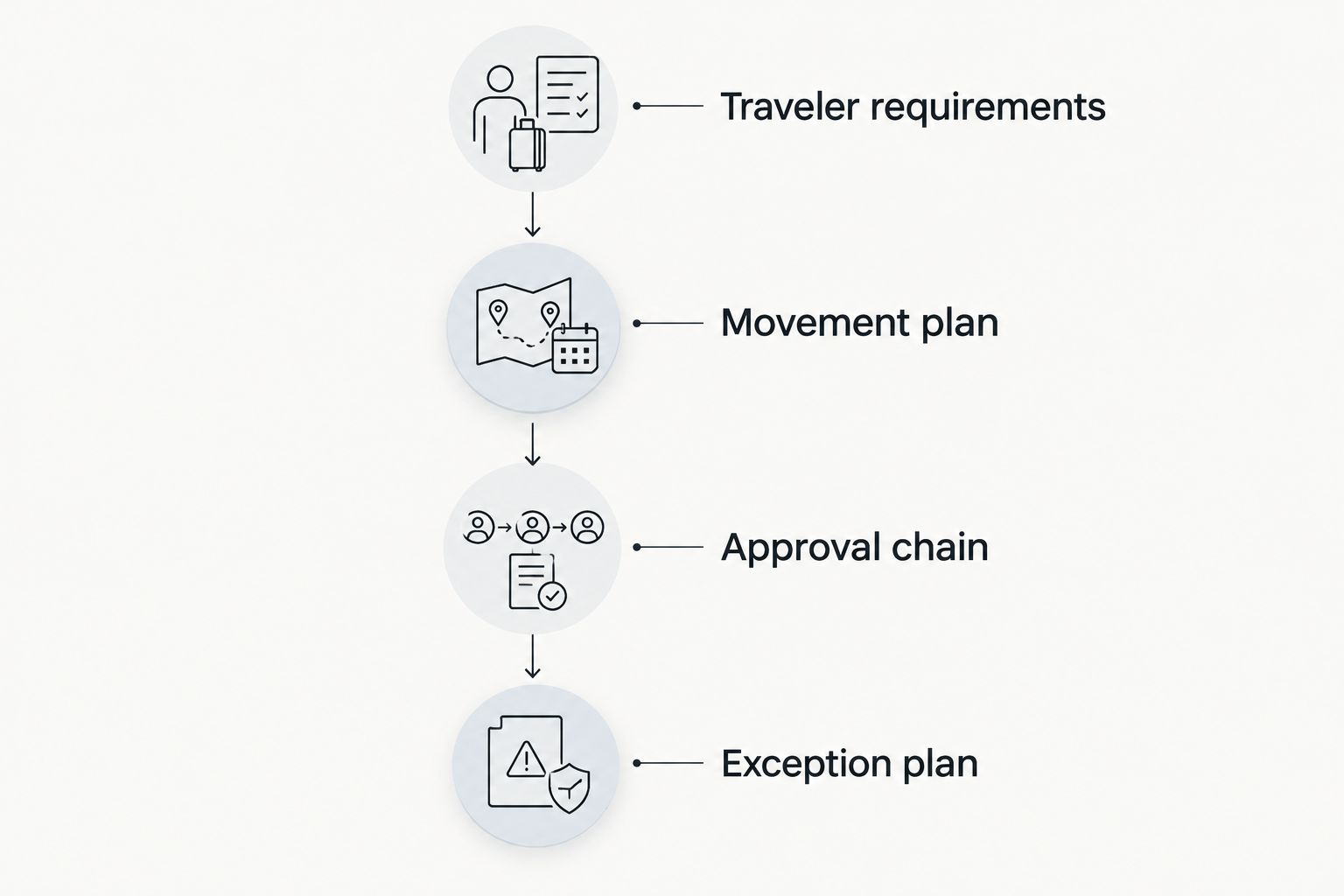
Keep the confirmed brief accessible to the people handling the trip. When an instruction changes, send a clearly identified revision rather than asking the chauffeur to reconcile several conflicting messages.
Where Chauffyr fits
Chauffyr is best for executive teams seeking coordinated chauffeur travel through one US-based desk. The service covers airport transfers, hourly charters, point-to-point journeys and coordinated corporate or delegation transport.
Chauffyr serves 120+ airports across 50+ countries through vetted chauffeurs and affiliates. Its US-based coordination and one 24/7 desk give assistants a central contact for worldwide assignments; that does not mean every local chauffeur is an employee or every vehicle belongs to the company.
Chauffyr pros: Flight tracking, fixed upfront quotes, no surge and corporate accounts with consolidated billing are stated parts of the offering. These features address arrival monitoring, commercial clarity and travel administration.
Chauffyr limitations: Worldwide affiliate coverage is not confirmation of a specific route, vehicle or local pickup arrangement. Obtain those details for your itinerary, along with the applicable booking terms, before committing.
Send your itinerary through the contact page to request a quote. Include the service format, traveler requirements and approval contact so the response addresses the actual assignment.
How the service formats were ranked
The ranking follows the planning criteria above: arrival coordination, itinerary control, chauffeur standards, privacy instructions, change handling and commercial clarity. Airport transfers lead for flight-linked journeys; hourly charters take the flexible-schedule slot; point-to-point travel fits settled endpoints; delegation transport addresses connected assignments.
These are use-case recommendations, not performance scores. Choose the format that resolves your scheduling problem, then evaluate the provider’s written response.
Which private chauffeur service should you choose?
Start with an airport transfer for a flight-linked journey and point-to-point travel for a settled address-to-address trip. Choose an hourly charter when retaining transport is essential to the schedule.
Use coordinated delegation transport when multiple movements need shared oversight. Do not make the traveler responsible for joining together bookings that should have been coordinated before departure.
FAQ
What's the best private chauffeur service for an executive airport arrival?
An airport transfer is the best service format when the flight is the main scheduling dependency. Confirm flight tracking, pickup instructions, passenger contact and waiting terms before booking.
Is an hourly chauffeur better than point-to-point travel?
An hourly charter is better for a changing schedule; point-to-point travel is better for a defined journey. Confirm assignment boundaries and change terms rather than assuming either format covers every movement.
Does flight tracking replace the need for a passenger contact?
No. Flight tracking follows the flight, while a passenger contact helps resolve the actual pickup. Provide both the traveler’s contact and an authorized coordinator’s contact.
Can one provider coordinate chauffeur travel across several countries?
Chauffyr offers worldwide coordination through vetted chauffeurs and affiliates, with service at 120+ airports across 50+ countries. Confirm the specific cities, routes and local fulfillment arrangements for your itinerary.
What should an executive assistant send when requesting a chauffeur quote?
Send the itinerary, passenger and luggage requirements, pickup details, destinations and authorized contact. Include privacy instructions and identify provisional stops so the proposed assignment matches the travel plan.
Does a private chauffeur booking include transport security?
Do not treat a chauffeur booking as confirmation of security services. State any security or protocol requirements separately and obtain explicit confirmation of the agreed scope.
What should I check before confirming a private chauffeur service in 2026?
Confirm the service format, pickup instructions, vehicle requirements, change process, billing and applicable terms. Make sure the traveler and coordinator know whom to contact when the itinerary changes.
One last thing
Confirm who can change the destination. A traveler, assistant and delegation coordinator can issue different instructions during the same assignment. Name the decision-maker in the booking brief and require confirmation that revised instructions reached the chauffeur.


