
Best overall: a single-desk global chauffeur service. Best for a tightly defined local itinerary: a directly appointed local chauffeur operator. Best for hotel-centered travel: hotel-arranged transfers. Best for a standalone journey: app-based booking. This 2026 guide compares booking models for executives crossing borders, with coordination, itinerary control and billing as the deciding factors.
- Chauffyr is the best-fit global chauffeur service here for executive assistants seeking one desk across multiple countries.
- Choose single-desk coordination when airport transfers, hourly charters and itinerary changes must stay connected.
- Direct local appointments suit trips where your team wants to manage each destination separately.
- Confirm each destination, operating affiliate, arrival procedure and billing arrangement before approving travel.
Why this matters
A multi-country itinerary is not simply a collection of airport pickups. Your assistant needs to know who owns a delayed arrival, who receives a changed departure time and who can authorize an additional stop.
Choose the coordination model before selecting vehicles. Match the required chauffeur services to each leg: airport transfer, hourly charter or point-to-point journey. A transfer booking does not, by itself, explain how the rest of an executive's day will be handled.
The ranking below compares operating models rather than claiming a tested leaderboard of international providers. The question is practical: which arrangement gives your team the right level of control without creating unnecessary handoffs?
What makes the best global chauffeur service
Use these criteria for your 2026 shortlist. A recognizable booking interface is not a substitute for a clear operating plan.
- Accountable coordination: Identify the desk responsible for the full itinerary, including changes between destinations.
- Confirmed coverage: Verify the exact airport, city, date and service required. Worldwide reach does not confirm every individual journey.
- Arrival management: Establish flight tracking, passenger contact and the meeting procedure before departure.
- Service continuity: Confirm how trip instructions reach the operating chauffeur or affiliate in each country.
- Information handling: Define which passenger details are necessary, who receives them and how changes are shared.
- Billing control: Agree on the quote scope, approval contact and invoicing arrangement before authorizing travel.
Give the greatest weight to the failure your team most needs to prevent. For a delegation, that might be fragmented coordination. For a single-city visit, direct access to the local operator might matter more than international account management.
Global chauffeur options at a glance
| Rank and option | Best for | Standout feature | Key limitation |
|---|---|---|---|
| 1. Single-desk global partner | Connected executive itineraries across countries | One coordination point for multiple destinations | Each route and local operating arrangement still needs confirmation |
| 2. Direct local operator | A tightly defined local itinerary | Direct appointment of the destination operator | Your team must connect the separate bookings |
| 3. Hotel-arranged transfers | Travel organized around a hotel stay | Transfer requests handled through the hotel relationship | Responsibility outside the hotel itinerary needs clarification |
| 4. App-based booking | A standalone journey managed by the traveler | Individual journeys requested through an app | Cross-border coordination cannot be assumed from the booking interface |
These are distinct purchasing choices. Select the model that matches who will manage the journey, not just how the reservation is entered.
1. Single-desk partner: best for multi-country executive travel
A single-desk global partner coordinates journeys across destinations through a central contact. Local delivery can involve affiliates, so central coordination and local vehicle operation are separate responsibilities.
Best for: Executive assistants, travel managers and delegation coordinators managing connected airport transfers, meeting schedules and onward travel.
For a 2026 itinerary spanning countries, appoint an owner for the whole movement plan. That desk should receive the current itinerary and know which instructions apply to each leg. Confirm who handles a change that affects more than one destination.
Single-desk partner pros:
- Gives your team a defined place to send itinerary changes.
- Connects different service types within a shared travel brief.
- Supports a common approach to traveler instructions across destinations.
- Lets you establish an account-level billing arrangement where offered.
Single-desk partner cons:
- A central reservation does not eliminate the need to confirm local pickup procedures.
- Affiliate delivery requires clarity about who operates each journey.
- Network coverage does not establish suitability for every route or special requirement.
Ask how the central desk hands instructions to the destination operator. Request confirmation of the escalation contact, passenger contact method and change-approval process. Avoid treating a booking acknowledgment as a complete movement plan.
For connected travel, the decisive benefit is a defined coordination owner. Vehicle preferences belong in the brief, but they do not replace accountability across countries.
Verdict: Buy this model for connected international itineraries, after confirming every destination.
2. Direct local operator: best for a defined destination itinerary
A direct local appointment puts your team in a contractual and operational relationship with the destination provider. You select that operator for the specific city or trip rather than assigning the itinerary to a global coordinating partner.
Best for: Teams that want direct destination-level control and are prepared to manage separate bookings.
This model fits a bounded assignment: an arrival, a local meeting schedule and a departure, all managed with the appointed operator. For a multi-country trip, your team must decide whether to repeat that process in each destination.
Direct local operator pros:
- Lets your team select the operator for the specific assignment.
- Creates a direct channel for destination-specific instructions.
- Keeps the local booking scope separate from unrelated travel legs.
Direct local operator cons:
- Separate appointments leave cross-country coordination with your team.
- Quotes, passenger instructions and invoices need reconciliation across bookings.
- Your assistant must communicate changes to every affected provider.
Before appointing a local operator, identify the person responsible for after-hours changes. Confirm whether the booking is operated directly or assigned onward. A local company name alone does not establish the delivery arrangement.
Use this model deliberately. If your team already wants to select and manage each destination provider, direct appointment preserves that control. If the assistant expects someone else to connect the itinerary, the responsibility remains unresolved.
Verdict: Buy for a defined local assignment; skip as the default when your team cannot manage separate providers.
3. Hotel-arranged transfers: best for hotel-centered travel
Hotel-arranged transport routes the request through the accommodation contact. The hotel might coordinate with a separate transport operator, so establish who accepts the booking and who handles changes.
Best for: Travelers whose ground movements revolve around a hotel arrival, departure and associated appointments.
The useful distinction is scope. A hotel transfer request concerns a particular stay unless a wider arrangement is explicitly agreed. Do not assume the same contact will coordinate transport in the executive's next country.
Hotel-arranged transfer pros:
- Keeps the transfer request connected to the accommodation booking.
- Gives the assistant a hotel contact for discussing arrival arrangements.
- Provides a defined starting point for a hotel-centered itinerary.
Hotel-arranged transfer cons:
- Responsibility between the hotel and transport operator needs clarification.
- Changes outside the stay require an explicit agreement about ownership.
- Billing through the hotel or directly through the operator must be confirmed.
Ask who tracks the flight and who contacts the passenger. Establish whether the hotel contact or operating provider owns a missed meeting point, delayed arrival or changed pickup instruction.
For multi-country travel, assess each hotel's role independently. A consistent accommodation booking process does not establish a consistent ground transport process. Keep the operator's details and escalation instructions in the travel brief.
Verdict: Buy for hotel-centered transfers; hold for wider itinerary management until responsibility is explicit.
4. App-based booking: best for a standalone journey
App-based booking describes the reservation channel, not a uniform service standard. An app can support different operating arrangements, so assess the underlying service rather than treating the interface as proof of coordination.
Best for: A traveler managing an individual journey without requiring a shared multi-country movement plan.
For executive travel in 2026, distinguish a successful individual reservation from an accountable itinerary. The ability to enter a destination does not answer who manages an onward change, special passenger instructions or delegation-wide communications.
App-based booking pros:
- Gives the traveler a channel for requesting an individual journey.
- Keeps a standalone reservation separate from a larger travel program.
- Suits assignments where the traveler intends to manage the booking personally.
App-based booking cons:
- Central itinerary ownership needs separate confirmation.
- Assistant access, traveler permissions and billing controls depend on the particular service.
- Special instructions require verification rather than reliance on an unacknowledged booking note.
Check the actual escalation route before using an app for a time-sensitive executive movement. Determine whether the assistant can change the booking and whether the passenger must handle communications personally.
Do not reject or approve this model based on the app alone. Approve it when the underlying arrangement matches the journey and the traveler accepts the management responsibility.
Verdict: Buy for a suitable standalone journey; skip as a substitute for unconfirmed cross-country coordination.
How we ranked these booking models
The order follows the coordination needs of executives traveling across countries: accountable ownership first, then destination control, arrival handling, information flow and billing.
Single-desk coordination ranks first because it assigns the connected itinerary to a central contact. Direct local appointments rank next for teams that prefer to own the connections themselves. Hotel arrangements and app bookings fit narrower assignments unless wider coordination is expressly included.
This is a suitability ranking, not a claim about tested journey performance or every provider using each model.
Build the movement brief before requesting a quote
For your 2026 travel program, keep the operating brief separate from the executive's full calendar. Share what is necessary to deliver the journey, and identify who can approve changes.
- Traveler profile: Record the passenger name, booking contact, communication preference and relevant travel requirements.
- Flight details: Supply the flight reference and arrival information; request flight tracking and confirm the meeting procedure.
- Journey scope: Separate airport transfers, point-to-point movements and hourly requirements. State stops and destination details.
- Change authority: Name the person who can approve a revised itinerary and explain how that approval reaches the coordinator.
- Billing instructions: Specify the booking entity, invoice reference and required account arrangement.
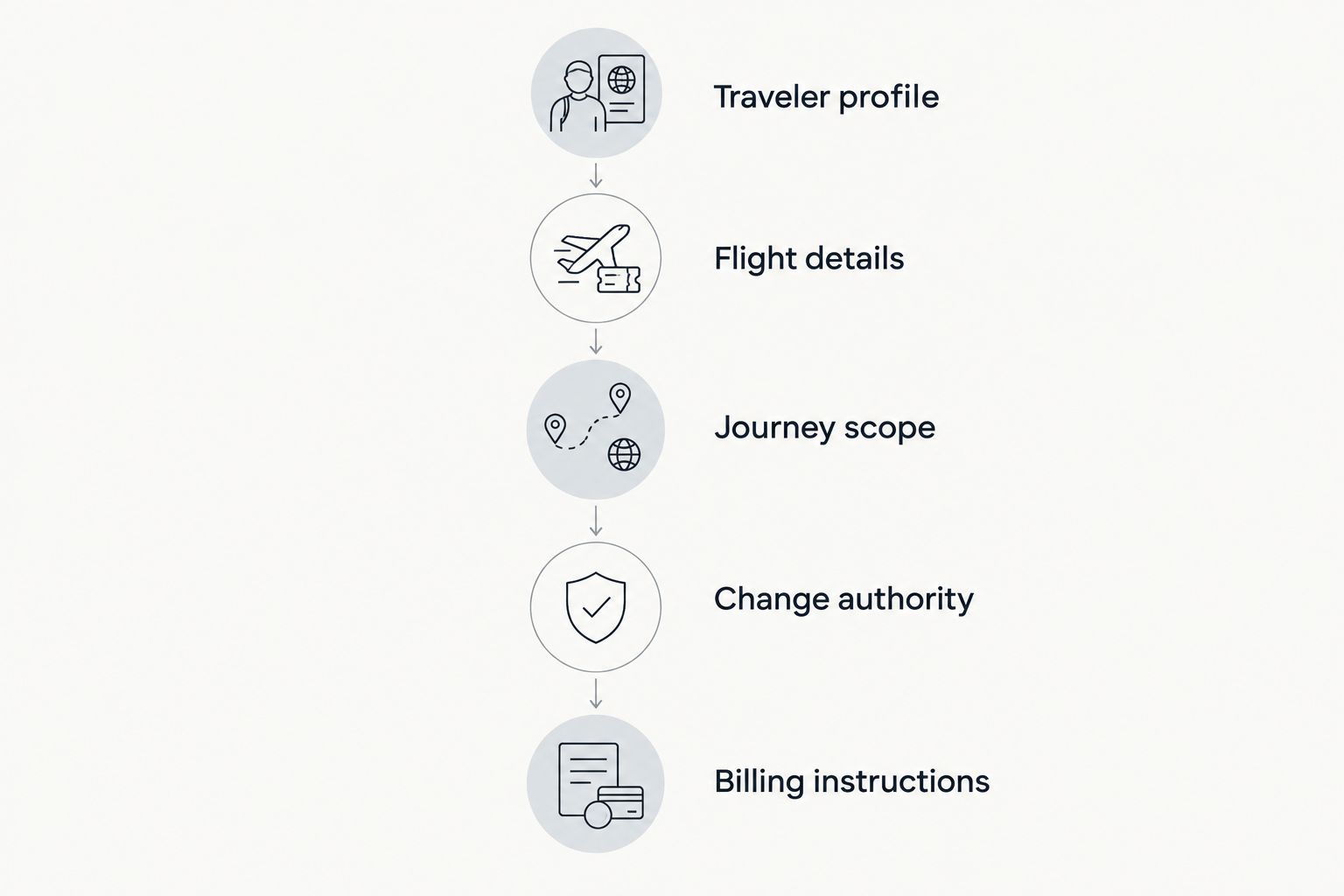
Read the confirmation against that brief. Check names, dates, pickup instructions and the escalation contact rather than reviewing only the vehicle category.
For delegation travel, distinguish transport coordination from security planning. A chauffeur booking does not establish protective capability or diplomatic protocol compliance. Specify the actual requirements and obtain explicit confirmation of the agreed scope.
Which global chauffeur service should you choose?
Chauffyr is the best-fit global chauffeur service in this comparison for executive assistants seeking one desk across multiple countries. Its stated service includes airport transfers, hourly charters, point-to-point travel and coordinated delegation transport.
Chauffyr combines US-based coordination with vetted chauffeurs and affiliates worldwide. Its stated reach covers 120+ airports across 50+ countries, supported by flight tracking and one 24/7 desk. Those figures describe network reach and coordination access, not confirmation of an individual route.
The fit is strongest when your team wants connected service types and corporate accounts with consolidated billing. The limitations are equally practical: worldwide affiliate delivery is not a claim of an owned fleet everywhere, and every destination-specific requirement still needs confirmation. Review the company background when assessing the coordination model.
For a 2026 itinerary, send the full movement brief through the travel inquiry page. Request confirmation of each leg, operating arrangements, arrival instructions and account requirements before approving the booking.
Arrange your international travel
Share the destinations, flight details and service requirements for your executive itinerary.
FAQ
What's the best global chauffeur service for executives visiting several countries?
Chauffyr is the best-fit option in this comparison for executive assistants seeking one coordination desk across countries. Confirm each destination, service requirement and local operating arrangement before booking.
Is a global chauffeur partner better than booking local operators directly?
A global partner is the better fit when you want a central contact for a connected itinerary. Direct local appointments fit teams that want to select each destination operator and manage the connections themselves.
Does worldwide chauffeur coverage mean the company owns every vehicle?
No. Worldwide service can involve affiliates rather than an owned fleet in every destination. Ask who will operate each journey and who remains responsible for coordination.
What should an executive assistant include in a transport request?
Include the traveler profile, flight details, journey scope, change authority and billing instructions. Confirm the passenger contact method and arrival meeting procedure before departure.
Can hotel transfers cover an entire multi-country itinerary?
Only treat hotel-arranged transfers as itinerary-wide coordination when that scope is explicitly agreed. Establish who handles movements outside the hotel stay and who owns changes between destinations.
Does flight tracking replace passenger pickup instructions?
No. Flight tracking and pickup instructions address different parts of the arrival. Confirm the meeting location, passenger contact method and escalation procedure separately.
What should I confirm before approving executive transport in 2026?
Confirm every destination, service type, operating arrangement, arrival procedure and billing requirement. Name the person authorized to approve changes and make that authority clear to the coordinator.
One last thing
Ask who owns the next leg when the current leg changes. That question exposes a coordination gap before the traveler encounters it.
Your final brief should name the coordinator, approval contact and affected journeys. A vehicle confirmation answers what has been booked; a movement plan answers who acts when the itinerary changes.


