
Best overall for a changing board-day itinerary: an hourly chauffeur charter. Best for airport arrivals: a scheduled airport transfer. Best for a direct journey: point-to-point service. Best for arrivals across several cities: coordinated delegation transport. The best chauffeur service for university trustees in 2026 is the format that matches the itinerary, gives the coordinator clear control, and states its operating terms before booking.
- The best chauffeur service for university trustees matches the itinerary: hourly charters for changing schedules, airport transfers for arrivals.
- Point-to-point service suits a defined journey; coordinated delegation transport suits linked travel across cities.
- Chauffyr suits organizers seeking airport transfers, hourly charters and point-to-point travel through one coordination desk.
- Confirm pickup instructions, itinerary changes, passenger requirements and billing before approving trustee ground travel.
Why this matters
A trustee visit is not simply an airport pickup. Your schedule can include a campus meeting, an off-campus dinner and separate departures, with different people responsible for each handoff. The booking must explain who controls changes and how the traveler receives instructions.
Start by matching the trip to a service format rather than selecting a vehicle alone. The chauffeur services overview is a starting point for distinguishing airport transfers, hourly charters and point-to-point travel. Confirm the actual route and requirements before approval.
This guide ranks booking formats, not competing providers. Each recommendation addresses a different travel pattern so you can choose the right arrangement without relying on unsupported provider rankings.
What makes the best chauffeur service for university trustees?
Use these criteria for your 2026 selection. A suitable booking answers each question in writing.
- Itinerary fit: Does the arrangement cover a single journey, waiting between meetings, or linked travel across cities?
- Arrival coordination: Who tracks the flight, sends meeting instructions and handles an arrival change?
- Change control: Who can add a stop, revise a departure or authorize an extension?
- Passenger requirements: Have you confirmed luggage, accessibility needs and the vehicle arrangement rather than assumed them?
- Discretion: What passenger information reaches the chauffeur, and what instructions govern signs and communications?
- Billing clarity: Does the confirmation identify the payer, approved scope and treatment of itinerary changes?
Do not treat discretion as a security certification. If a trustee has protective requirements, the responsible security team must approve the transport arrangements separately.
Trustee chauffeur options at a glance
| Rank and format | Best for | Standout feature | Key limitation |
|---|---|---|---|
| 1. Hourly chauffeur charter | A board day with changing stops | Keeps a defined service window around the itinerary | Service window and change terms require confirmation |
| 2. Scheduled airport transfer | A flight-linked arrival or departure | Organizes the airport-to-destination handoff | Does not establish coverage for later meetings |
| 3. Point-to-point service | A direct journey between confirmed addresses | Gives a discrete trip a clear scope | Additional stops change the original brief |
| 4. Coordinated delegation transport | Linked arrivals and movements across cities | Connects separate travel legs under a coordination plan | Requires a detailed movement schedule and local confirmations |
1. Hourly chauffeur charter: best for changing board-day schedules
An hourly chauffeur charter organizes transport around a booked service window rather than a single destination. It is the strongest default when your trustee itinerary includes several stops and uncertain meeting end times. Confirm how waiting, extensions and route changes work before booking.
Best for: A trustee moving between campus meetings, accommodation and an evening engagement during the same service window.
The practical advantage is continuity of instructions. You can brief the transport coordinator on the day's sequence instead of treating each movement as an unrelated reservation. That does not establish an unlimited operating area or unrestricted schedule changes; both need explicit agreement.
Hourly chauffeur charter pros:
- Matches an itinerary with several planned stops.
- Allows you to organize waiting periods within the agreed scope.
- Gives the coordinator a defined window for managing movements.
Hourly chauffeur charter cons:
- Extensions and changes still need confirmed terms.
- An hourly arrangement alone does not confirm vehicle suitability or access to campus pickup points.
Before approval, send the opening pickup, final destination, expected stops and the person authorized to amend the schedule. Identify any fixed commitments, such as a meeting start or departure flight, separately from flexible stops.
Verdict: Buy an hourly charter when itinerary control matters more than a single transfer.
2. Scheduled airport transfer: best for flight-linked arrivals
A scheduled airport transfer connects an airport movement with a defined destination. It is the right format when the primary task is getting the trustee from the flight to accommodation or campus, rather than keeping transport assigned throughout the visit.
Best for: A trustee arriving for a visit whose later ground travel is already arranged.
For your 2026 arrival brief, distinguish flight tracking from the complete pickup procedure. Tracking a flight does not answer where the traveler meets the chauffeur, which phone receives instructions, or what happens if the passenger remains inside the terminal longer than expected. Confirm those details directly.
Scheduled airport transfer pros:
- Keeps the arrival leg separate from the rest of the visit.
- Supports a focused brief containing flight details and a destination.
- Makes the airport handoff an explicit part of the booking.
Scheduled airport transfer cons:
- Does not establish transport coverage after arrival at the destination.
- Meeting arrangements, waiting terms and flight-change handling need separate confirmation.
Provide the flight identifier, arrival date, passenger contact and destination address. Request the meeting procedure in writing. If meet-and-greet assistance matters, ask for it explicitly rather than assuming it comes with every airport booking.
Verdict: Buy an airport transfer for the flight-linked leg; do not assume it covers the board day.
3. Point-to-point service: best for a defined direct journey
Point-to-point service covers a journey between agreed locations. Choose it when the pickup, destination and timing are settled, and no assigned waiting period or sequence of meetings is required.
Best for: A trustee traveling from accommodation to a meeting, or from an event to a confirmed destination.
The main decision is whether the trip is genuinely self-contained. A return journey, intermediate stop or uncertain finish time adds requirements that must appear in the booking. If you already expect repeated changes, reconsider whether an hourly charter better matches the task.
Point-to-point service pros:
- Gives a discrete movement a clear beginning and end.
- Keeps the travel brief focused on the required journey.
- Works as a separate leg within a larger trustee itinerary.
Point-to-point service cons:
- A return journey is not established by the outbound booking.
- Waiting or extra stops require clarification rather than assumption.
Use the actual meeting entrance, not just the institution's postal address. Ask the campus host to confirm the permitted pickup location and any access instructions. Include the traveler-facing destination name so a familiar building name does not conflict with the address on the confirmation.
Verdict: Buy point-to-point service when the journey is fixed; skip it as a substitute for an unsettled itinerary.
4. Coordinated delegation transport: best for linked city visits
Coordinated delegation transport connects separate movements through a shared travel plan. It fits a trustee group visiting several cities or arriving on different flights when one organizer must oversee the full schedule.
Best for: A university coordinator responsible for linked trustee arrivals, departures and local movements across cities.
This is a coordination requirement, not proof that a provider owns vehicles everywhere. Ask who operates each local leg, who sends instructions and which desk handles changes. Keep worldwide coordination separate from assumptions about local vehicle ownership or chauffeur employment.
Coordinated delegation transport pros:
- Brings separate movements into a shared itinerary.
- Gives the organizer a place to consolidate traveler assignments.
- Supports common briefing and escalation instructions across legs.
Coordinated delegation transport cons:
- Each city still needs route, vehicle and pickup confirmation.
- Incomplete passenger assignments leave gaps in the movement plan.
For a 2026 multi-city visit, maintain a movement sheet showing the traveler, local date and time, flight where relevant, pickup, destination and authorized contact. Mark revisions clearly. Do not distribute a replacement itinerary without identifying which movements changed.
Verdict: Buy coordinated delegation transport when linked movements need shared oversight, not merely separate reservations.
Build a trustee travel brief before booking
A useful brief separates the traveler's requirements from the coordinator's operating instructions. Keep sensitive information limited to what the transport team needs to carry out the journey.
Use this sequence:
- Traveler brief: Record the passenger name, contact preference, luggage and any accessibility requirements to confirm.
- Movement plan: Identify each pickup, destination, local date and time, and any flight connection.
- Change authority: Name the person allowed to revise the itinerary and approve additional service.
- Pickup confirmation: Obtain the meeting instructions and the correct contact for an unsuccessful handoff.
- Billing instructions: Identify the paying entity, reference requirements and invoice recipient.
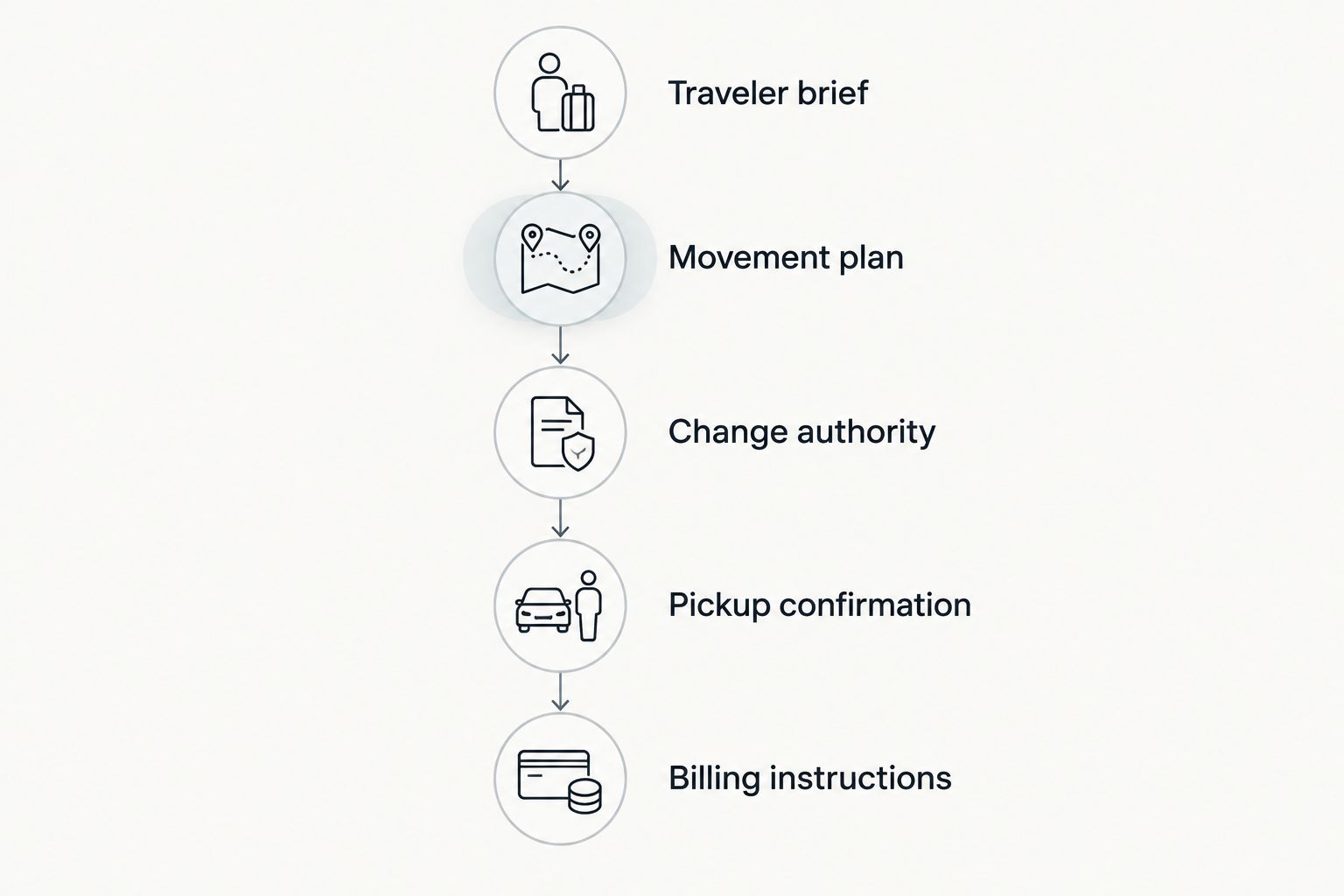
Check the brief against the booking confirmation, not just the original request. A requested vehicle arrangement or pickup procedure remains a request until the provider confirms it. Resolve discrepancies before circulating final instructions.
How the formats are ranked
The ranking prioritizes itinerary fit, arrival coordination and change control, followed by passenger requirements, discretion and billing clarity. Hourly service ranks first for a changing board day because the booking is organized around a service window. Airport and point-to-point formats are better matches for narrower tasks.
These are planning recommendations, not results from vehicle inspections or comparative road tests. The deciding evidence is the written confirmation for your actual route and passenger requirements.
Which chauffeur arrangement should you choose?
Choose an hourly charter as the default for a trustee's changing board-day itinerary. Choose an airport transfer for an arrival-only task, point-to-point service for a fixed journey, and coordinated delegation transport for linked city visits.
Chauffyr is a US-based executive chauffeur partner offering these service formats, with worldwide service through vetted chauffeurs and affiliates. Its stated coverage includes 120+ airports across 50+ countries, with flight tracking and one 24/7 desk. Confirm the specific airport, route and vehicle arrangement for your visit.
Chauffyr is best for trustee travel organizers who want airport transfers, hourly charters and point-to-point journeys coordinated through one desk. That fit rests on the stated service model, not an assertion of university endorsements or campus-specific experience.
The Chauffyr service model includes fixed, upfront pricing and no surge; corporate accounts offer consolidated billing. Ask how your proposed itinerary, changes and billing requirements will appear in the confirmation. No surge does not define the scope of a revised journey.
For your 2026 trustee schedule, send the movement brief through the travel coordination contact and request confirmation of the operating details before approval.
Arrange trustee travel
Share the itinerary, passenger requirements and billing instructions for your proposed movements.
FAQ
What's the best chauffeur service for university trustees?
An hourly chauffeur charter is the best default for a trustee's changing board-day itinerary. Choose an airport transfer for a flight-linked leg, point-to-point service for a fixed journey, or coordinated delegation transport for linked city visits.
Is an hourly chauffeur better than separate transfers?
An hourly chauffeur charter is the better fit when the itinerary includes several stops and uncertain departure times. Separate transfers fit discrete journeys with confirmed pickups and destinations; confirm change and waiting terms for either arrangement.
Does flight tracking include airport meet and greet?
Do not treat flight tracking as confirmation of meet-and-greet assistance. Request the meeting procedure separately and confirm where the traveler receives pickup instructions.
Can Chauffyr coordinate trustee travel in different countries?
Chauffyr describes worldwide service through vetted chauffeurs and affiliates, with coverage at 120+ airports across 50+ countries. Confirm every proposed city, route and vehicle arrangement before treating the itinerary as booked.
What should an executive assistant send before booking trustee travel?
Send the traveler requirements, movement schedule, authorized change contact and billing instructions. Include flight details where relevant and obtain written confirmation of pickup procedures.
Does a chauffeur booking guarantee privacy or protective security?
A chauffeur booking alone does not establish privacy procedures or protective security. Confirm information handling and communication instructions, and have the responsible security team approve any protective requirements separately.
How should a university arrange billing for trustee transport?
Identify the paying entity, required references and invoice recipient before confirming travel. If consolidated billing is required, confirm the account arrangement and how individual movements will be identified.
One last thing
Treat the return journey as its own decision. A confirmed outbound trip does not establish a return pickup, an assigned waiting period or authority to extend service. Before releasing the itinerary, check that every movement has a confirmed arrangement and that the trustee knows whom to contact when plans change.


