
Best overall: a prebooked point-to-point transfer. Best for an itinerary that changes: an hourly chauffeur charter. Best for several travelers on different flights: coordinated group transport. The best car service from SFO to Napa in 2026 matches your arrival, exact destination and onward schedule—not just your flight’s landing time.
- Choose a prebooked point-to-point transfer for car service from SFO to Napa with one destination.
- Choose an hourly chauffeur charter when Napa Valley stops or departure times remain open.
- Choose coordinated group transport for separate flights, multiple vehicles and shared itinerary control.
- Chauffyr suits executive travel coordinators who need one desk; confirm the SFO-to-Napa itinerary before booking.
Why the booking format matters
An airport arrival and a Napa Valley itinerary are different assignments. Your flight determines when the journey can begin; your hotel, residence or meeting venue determines where the transfer actually ends.
Start by separating the airport transfer from any travel after arrival. A direct hotel drop-off calls for a different booking than an afternoon of meetings followed by dinner and a late return.
Compare the chauffeur service formats before requesting a vehicle. For your 2026 booking, write down the destination, expected stops and person authorized to change the plan. Those details make competing proposals easier to assess.
What makes the best SFO-to-Napa car service
Rank the operating plan before the vehicle description. These criteria apply whether you arrange travel for an executive, visiting counsel or a delegation.
- Arrival coordination: Request flight tracking, a clear meeting procedure and instructions if the traveler cannot locate the chauffeur.
- Exact destination: Supply the property name and street address. “Napa Valley” is not a complete drop-off instruction.
- Booking scope: Establish whether the assignment ends at drop-off or keeps the chauffeur assigned for later travel.
- Vehicle fit: State the passenger count, luggage and any mobility or child-seat requirements. Obtain written confirmation of the requested arrangement.
- Change ownership: Name the person who can approve a revised destination, additional stop or different departure time.
- Written terms: Review waiting, cancellation, extra stops, incidentals and billing before accepting the booking.
For a 2026 itinerary, use the same written brief for every proposal. Otherwise, you are comparing different assignments rather than different providers.
SFO-to-Napa options at a glance
The ranking below compares service formats, not a tested league table of operators. Choose the format first, then confirm that the provider accepts the route and your operating requirements.
| Rank and option | Best for | Standout feature | Key limitation |
|---|---|---|---|
| 1. Prebooked point-to-point transfer | One traveler or party going directly to a confirmed address | A defined airport-to-destination assignment | Later travel needs a separate arrangement unless included |
| 2. Hourly chauffeur charter | Meetings, visits or appointments with changing departure times | An assigned service window for the itinerary | Requires clear rules for the booking’s end and any extension |
| 3. Coordinated group transport | Delegations or teams arriving on separate flights | A shared movement plan across travelers and vehicles | Requires more detailed passenger and dispatch instructions |
A vehicle category does not answer the scheduling question. Choose the assignment that fits the day, then request a vehicle suitable for the people and luggage.
1. Point-to-point transfer: best for a direct hotel arrival
A prebooked point-to-point transfer covers a defined journey from the airport to an agreed destination. Choose it when everyone travels together and the itinerary ends at a hotel, residence or meeting venue.
This is the default recommendation because the assignment is clear. Your booking should identify the arriving flight, passenger contact, pickup procedure and exact drop-off address without leaving onward travel implied.
Point-to-point transfer pros
- Keeps the airport arrival separate from later activities.
- Gives the traveler and coordinator a defined destination.
- Makes it straightforward to compare proposals using the same route brief.
- Avoids reserving an ongoing service window when none is needed.
Point-to-point transfer cons
- Does not reserve a chauffeur for later errands or dinner unless expressly included.
- Additional stops change the original assignment and need confirmation.
- A separately booked return requires its own pickup instructions.
Best for: An executive or small party traveling directly from SFO to a confirmed Napa Valley address.
Before accepting, ask what marks the end of the transfer. A hotel entrance, private property gate and venue reception point are not interchangeable instructions. Include an arrival contact if access requires someone at the destination.
For the return journey, create a separate departure brief. Do not treat an airport arrival plan as sufficient instruction for collecting the traveler several days later.
Verdict — Buy: Choose a point-to-point transfer when the destination is fixed and no chauffeur time is needed after arrival.
2. Hourly charter: best for a changing Napa itinerary
An hourly chauffeur charter reserves service for an agreed period rather than treating each movement as an isolated transfer. Choose it when the airport pickup leads into appointments, property visits or several destinations with uncertain departure times.
The useful distinction is continued assignment. Confirm that airport pickup, travel between stops and waiting at destinations all fall within the proposed scope.
Hourly charter pros
- Supports several stops within one defined assignment.
- Keeps itinerary changes with an identified coordinator.
- Lets you provide a sequence of destinations rather than disconnected bookings.
- Suits days when meeting end times remain unsettled.
Hourly charter cons
- Requires an agreed service window even when the schedule is uncertain.
- An extension beyond the booked period needs confirmation.
- Waiting location and chauffeur contact procedures still need instructions at each venue.
Best for: A traveler whose SFO arrival leads directly into a changing schedule around Napa Valley.
Send the likely itinerary, not just the first stop. Mark appointments as fixed or flexible, identify any hard arrival deadline and state where the assignment should end.
Do not assume an hourly booking grants unrestricted changes. Confirm the geographic scope, extension process and who can authorize revisions. If the day ends outside the original area, put that destination in the request.
Verdict — Buy: Choose an hourly charter when continued assignment matters more than a single drop-off; skip it for a straightforward hotel transfer.
3. Coordinated transport: best for separate-flight arrivals
Coordinated group transport treats several passenger movements as one managed itinerary. Use it when executives, colleagues or delegation members arrive separately, need different vehicles or follow different schedules after landing.
The central requirement is a shared movement plan. Each traveler still needs an individual pickup instruction, while the lead coordinator needs visibility across the assignment.
Coordinated transport pros
- Connects separate flight arrivals to one itinerary brief.
- Assigns responsibility for traveler and vehicle changes.
- Supports different destinations without treating the group as one arrival.
- Gives finance teams a basis for requesting consistent trip references.
Coordinated transport cons
- Needs accurate passenger, flight and destination information before dispatch.
- Changes must reach both the affected traveler and the coordinating contact.
- Consolidated billing must be agreed rather than assumed.
Best for: An executive assistant, travel manager or diplomatic coordinator managing several related arrivals.
Build the movement sheet around travelers, not vehicle labels. Each entry should identify the flight, passenger contact, destination, luggage requirements and person authorized to approve a change.
For sensitive travel, separate the information needed for dispatch from unrelated meeting details. Share the operational brief with the people who need it, and ask how passenger information and pickup signage will be handled.
Verdict — Buy: Choose coordinated transport for genuinely separate movements; skip the extra planning layer when everyone shares one flight and destination.
Build a pickup plan that survives a flight change
For a 2026 SFO-to-Napa booking, establish the communication sequence before travel day. Flight tracking belongs in that plan, but it does not replace a clear traveler contact and meeting instruction.
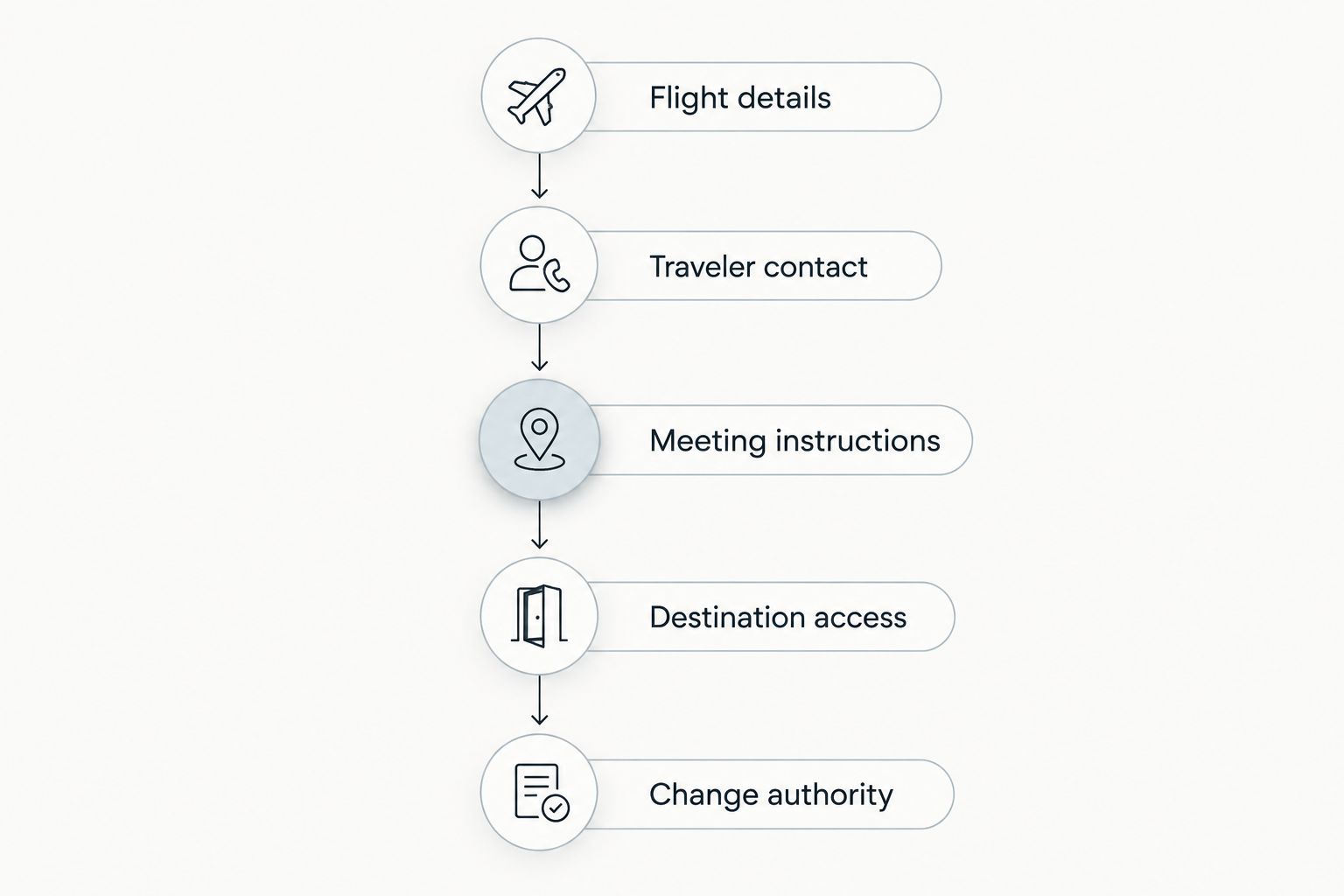
Use this sequence when preparing the request:
- Flight details: Supply the operating flight, arrival date and passenger name used for the booking. Flag a connecting itinerary.
- Traveler contact: Provide a working mobile number and an assistant or travel-desk backup.
- Meeting instructions: Request the confirmed meeting procedure and the number to use if the traveler cannot find the chauffeur.
- Destination access: Give the full address and any gate, reception or host instructions.
- Change authority: Identify who approves a revised pickup, added stop or different final destination.
A complete plan connects the flight, traveler and destination. It also prevents an assistant from becoming the only person who knows how the trip is supposed to work.
What to put in the quote request
Write the request so another coordinator can understand the assignment without a follow-up call. Keep assumptions out of the itinerary and turn them into questions.
Include these details:
- Arrival date, operating flight and exact Napa Valley destination.
- Passenger count, luggage and any equipment traveling with the party.
- Direct transfer, hourly assignment or coordinated group movements.
- Planned stops and the final destination for an hourly assignment.
- Traveler contact, coordinator contact and change authority.
- Requested vehicle category and any accessibility requirements.
- Required billing entity, trip reference and invoice recipient.
Then request written confirmation of the pickup procedure, waiting terms, cancellation terms and treatment of itinerary changes. For 2026 corporate travel, make the itinerary version clear so the traveler, assistant and dispatch contact work from the same instructions.
A precise request does not need confidential meeting content. It needs enough detail to carry out the movement.
Where Chauffyr fits
Chauffyr is best for executive travel coordinators who need airport transfers and itinerary changes handled through one 24/7 desk. The US-based coordination model serves worldwide travel through vetted chauffeurs and affiliates; it does not imply a company-owned fleet in every destination.
Chauffyr describes coverage at 120+ airports across 50+ countries. Its desk operates 24 hours a day. For this journey, request confirmation of the SFO pickup, exact Napa Valley address, vehicle requirements and selected service format.
Chauffyr airport transfers include flight tracking, while corporate accounts offer consolidated billing. Ask for the applicable waiting, cancellation and change terms in the written confirmation. Flight tracking does not answer where the traveler should meet the chauffeur or who approves an added stop.
The fit is strongest when the coordinator needs a continuing contact across several travel assignments. For a single direct arrival, keep the request narrow rather than adding services the traveler does not need.
Arrange your SFO-to-Napa travel
Send the flight, destination, passenger details and service format for a route-specific quote.
How the options were ranked
The ranking prioritizes a clear assignment, arrival coordination, itinerary control, vehicle fit and written terms. A point-to-point transfer takes the default position because it matches the simplest brief: one airport pickup and one destination.
Hourly service ranks first for changing schedules. Coordinated transport ranks first for separate-flight groups. No operator testing, route-time measurement or service-quality score is implied by this format comparison.
Which SFO-to-Napa service should you choose?
Book a prearranged point-to-point transfer unless your itinerary requires continued chauffeur assignment or multiple coordinated movements. That is the clearest starting point for a direct arrival.
Choose an hourly charter when the traveler needs transport between later stops. Choose coordinated transport when separate arrivals require a shared operating plan. For your 2026 trip, settle that distinction before selecting a vehicle.
FAQ
What's the best car service from SFO to Napa for a direct hotel transfer?
A prebooked point-to-point transfer is the best format for a direct hotel arrival. Confirm the exact address, pickup procedure, luggage requirements and traveler contact before booking.
Should I book an hourly chauffeur from SFO to Napa Valley?
Book an hourly chauffeur when the airport arrival leads into several stops or uncertain departure times. Confirm that the service window includes the airport pickup, travel between destinations and waiting.
Can I add winery stops to an SFO airport transfer?
Request and confirm winery stops before accepting the booking. A direct airport transfer does not establish an ongoing itinerary; an hourly assignment is the better format when several stops need continued chauffeur service.
How long should I allow between landing at SFO and a Napa appointment?
Build the appointment plan around airport exit, confirmed pickup and the drive to the exact destination—not landing time alone. Ask the provider to assess the itinerary using your flight details and destination address.
Does flight tracking replace the need to contact the chauffeur?
No. Flight tracking and traveler communication serve different purposes. Keep the confirmed meeting instructions and dispatch contact accessible after landing.
Is Chauffyr suitable for executive airport transfers?
Chauffyr suits executive coordinators who need flight tracking, vetted chauffeurs and affiliates, and one 24/7 desk. Confirm the specific SFO-to-Napa assignment, vehicle requirements and applicable terms in writing.
What's the best transport format for a delegation arriving on different flights?
Coordinated group transport is the best format for separate-flight arrivals. Give each traveler an individual pickup instruction and appoint one lead contact to authorize changes across the itinerary.
One last thing
Save the return-airport brief before the outbound trip begins. A successful arrival does not establish the return pickup address, departure time or luggage arrangement.
Keep the traveler’s version short: meeting instruction, contact number and destination. Keep authorization and billing detail with the coordinator.


